
10 Best Email Marketing Softwares for Indian Businesses in 2026: Free & Paid
Email marketing delivers a staggering 36X to 42X return on investment (ROI)! That’s up to INR42 return on every rupee you invest into it. However, your ability to extract such high returns from your email marketing campaign is limited by your choice of email marketing softwares. Unfortunately, you cannot just pick email marketing tools for your Indian business from generic, global “best-of” lists. There are several reasons for that.
Firstly, context matters. A startup in Bangalore, a tech giant in Hyderabad, a coaching institute in Delhi, and a real estate company in Mumbai have very different goals set out for their email marketing campaigns. Secondly, the Indian business environment demands email marketing softwares that are uniquely tailored to Indian business realities. Without this localization, email marketing tools designed for the global audience fail to deliver desired results.
This localized guide cuts through the noise, and brings you a practical, no-fluff comparison of the best email marketing tools for Indian businesses. We have compared a mix of global and home-grown email marketing softwares, and they’re all tailored to the Indian business landscape.
Comparison Table of the 10 Best Email Marketing Softwares for Indian Businesses
| Software Name | Free Tier Availability | INR Pricing & Proper GST Invoices? | Native WhatsApp / SMS Gateways? | Ideal Indian Business Segment |
| Zoho Campaigns | Free up to 2,000 contacts / 6,000 emails per month | Yes (Native INR billing starting around ₹180 /mo + 18% GST) | Yes (Integrated SMS + built-in automation hooks) | Indian SMEs already in the Zoho ecosystem |
| Mailmodo | Free trial only | Yes (INR Billing starting around ₹4,000/mo + 18% GST) | Yes (Omnichannel journeys across email, SMS, and WhatsApp) | D2C brands and e-commerce businesses focused on high conversions. |
| Brevo | Free up to 300 emails per day (Unlimited contacts) | Yes (Premium plans start at ₹562.50 + 18% GST) | Yes (Robust built-in WhatsApp API & Indian SMS integrations) | Businesses with huge subscriber base and flexible email marketing needs. |
| HubSpot | Free basic tools available | Yes (INR Billing starting around ₹1,670/mo/seat + 18% GST) | Yes (Omnichannel CRM tools with WhatsApp and SMS integration) | Enterprises, venture-backed B2B startups and corporate mid-markets |
| Mailchimp | Free basic tier for up to 250 contacts | Yes (INR Billing starting around ₹385 + 18% GST) | Limited (Requires third-party integrations for SMS and WhatsApp) | Legacy businesses that need brand familiarity |
| Klaviyo | Free up to 250 contacts / 500 email sends | No (USD billing only; starts at approximately ₹1,900 per month) | Yes (But WhatsApp needs local tech mapping. SMS not offered in India) | D2C e-commerce brands on Shopify/WooCommerce |
| ActiveCampaign | Free trial available | No (Billing in multiple foreign currencies; starts at about ₹1,450 per month) | Yes (Excellent SMS triggers, WhatsApp requires SMS partner add-ons) | B2B setups needing complex, enterprise marketing automation |
| Omnisend | Free tier available for small lists | No (USD billing only; starts at about ₹1,500 per month) | Yes (omnichannel workflows support SMS. WhatsApp needs third-party integration) | E-commerce brands seeking a cheaper alternative to Klaviyo |
| MailerLite | Free up to 250 subscribers / 12,000 emails per month | No (USD/GBP/EUR billing only; starts at about ₹1,000 per month) | No native support for WhatsApp or SMS. Relies on external integrations) | Solo entrepreneurs, boutique agencies, and independent consultants |
| Kit (ConvertKit) | Free tier available for up to 10,000 subscribers | No (USD billing only; starts at about ₹3,150 per month) | No native support for SMS or WhatsApp | Independent creators, authors, freelancers, online educators, and influencers |
Why Indian Businesses Need Localized Email Marketing Softwares?
Generic roundups of the top email marketing tools focus on global audiences, while completely ignoring the structural, operational, and commercial nuances that affect businesses in countries like India. We’ve turned a spotlight on precisely these factors to help Indian businesses find the right email marketing stack for their needs:
1. INR Billing
The global “Top-10” lists of email marketing tools are almost always dominated by Western companies, which offer USD pricing. This presents several problems for Indian businesses.
For one, Indian businesses pay an average of 1% to 3.5% currency conversion fees on their USD transactions. This miscellaneous cost adds up fast over the span of a year.
Yet, this fee doesn’t even compare to the high cost that businesses incur on account of differences in purchasing power parity (PPP). On account of India’s high PPP conversion factor of 20, a tool that costs USD 10 in the U.S. should cost about INR200 in India. However, direct currency conversion pushes the price to roughly INR950 (early June, 2026), which is five times higher.
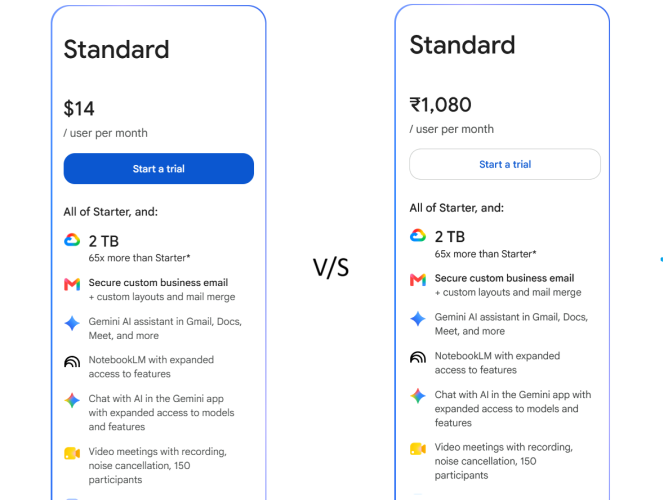
Global businesses with a local presence often account for this and price their services accordingly. For instance, the Standard package of Google Workspace, which costs $14 per user per month in the US, costs only INR1,080 in India. The difference isn’t big, but matters anyway.
2. GST Compliance
Global vendors transacting in foreign currencies typically do not offer GST invoices to Indian businesses. Without the invoice and vendor’s GSTIN, Indian businesses cannot claim the 18% GST as input tax credit (ITC). For a business spending INR50,000 on email marketing tools, the lost ITC runs into tens of thousands, a significant share of their email marketing budget.
3. Deliverability to Local Sub-Networks
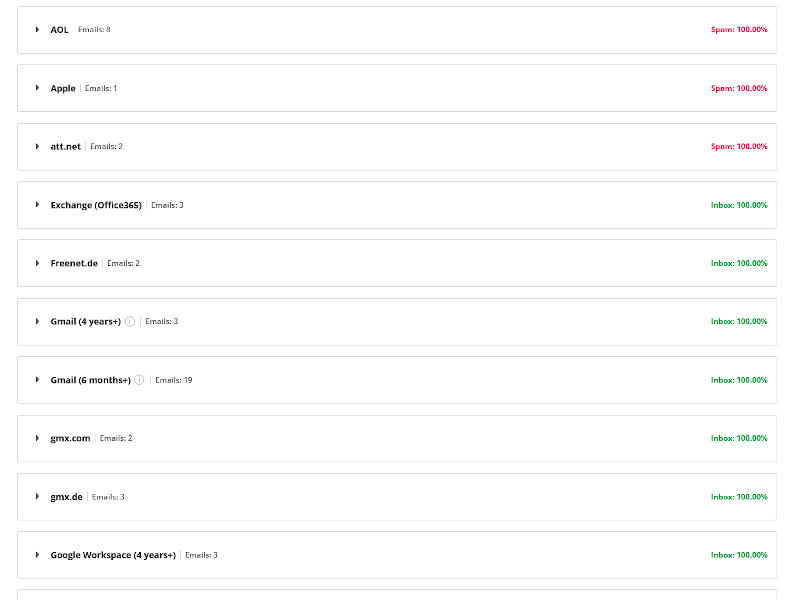
On average, 1 in every 6 marketing emails never reaches the inbox. It either bounces or lands in spam. Email marketing tools ensure high deliverability of their emails by building trust with email infrastructure players like email providers, regulatory bodies, internet service providers (ISPs), routing networks, and so on.
Global email marketing tools enjoy strong trust with Western email infrastructure entities like Gmail, Outlook, Yahoo, Verizon, and so on. That matters little in the Indian context.
Here, email providers have localized domains like Yahoo.in, regional players like Rediffmail exist, and domestic gateway giants like ValueFirst and Route Mobile come into the picture. Email marketing tools that do not enjoy high trust with these local players suffer from low deliverability, which drastically compromises the effectiveness of email marketing campaigns.
Fortunately, you can gradually build your domain reputation within the local email infrastructure and improve your inbox placement using email warmup tools. They simulate authentic communication between your email address and server with a multitude of email service providers (ESPs) to train their automated spam filters, and land in your prospects’ inboxes.
4. WhatsApp-SMS-Email Omnichannel Outreaches
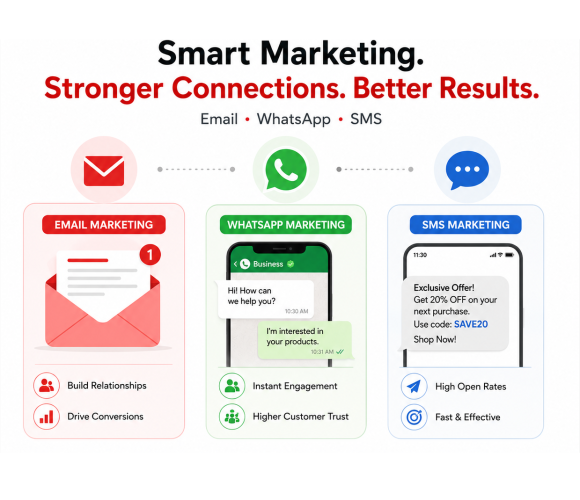
Unlike businesses in global markets, Indian businesses do not take a siloed approach to Email Marketing, SMS Marketing, and WhatsApp marketing. They mount omnichannel marketing campaigns that deliver consistent brand messaging across the three channels. Naturally, many Indian email marketing softwares feature built-in capabilities to send communications across all three channels, or at least support integrations to make it possible through add-on services.
Such a unified infrastructure is generally absent in global email marketing tools.
5. Local Support
Businesses routinely mount email marketing campaigns with potential ROI running into several million rupees. When their email marketing stack does not work as intended, disgruntled business leaders look for timely and dependable support, including speedy resolutions. After all, the stakes are quite high for them.
Unavailability of local support, support limited to US work hours, communication gaps, and other issues can exacerbate an already bad situation.
Top 10 Email Marketing Softwares in India Compared
1. Zoho Campaigns: Best All-rounder for Simple Email Marketing
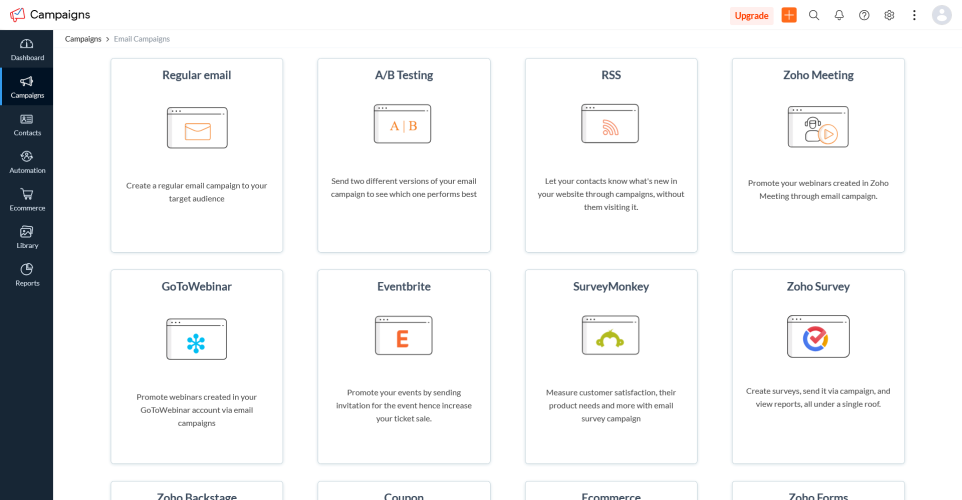
Zoho Campaigns is an India-first email marketing tool, and it comes fully decked with localized features, such as local pricing, billing, and compliance. It is beginner-friendly, fuss-free, and highly intuitive to use, which translates to a flat learning curve for new talent, thereby saving training costs.
Zoho Campaigns Pros
- India-first Vendor: Billings are performed in INR, invoices are GST-compliant, and customer support is available during IST business hours.
- Large Ecosystem Integration: Many Indian businesses already use Zoho’s suite of apps like Zoho CRM, Zoho Mail, Zoho POS, and so on. Zoho Campaigns seamlessly integrates into these suites and provides a unified ERP ecosystem for them.
- Generous Forever-free Plan: Zoho Campaigns offers one of the most generous free plans in the industry, supporting 2,000 subscribers, 6,000 emails per month, 5 users, and plenty of email templates.
- Affordable: Premium plans start as low as INR180 per month on annual billing, which is among the lowest rates in the industry.
Zoho Campaigns Cons
- Dated Interface: The UI doesn’t feel as polished and smooth as some of the other options.
- Fewer Integrations: Doesn’t offer native WhatsApp integration, among others.
Best For
- Almost all types of Indian businesses looking for a highly scalable email marketing tool.
- Ideal for Indian B2B businesses already in Zoho’s ecosystem.
2. Mailmodo: High-conversion Asset for E-commerce Businesses
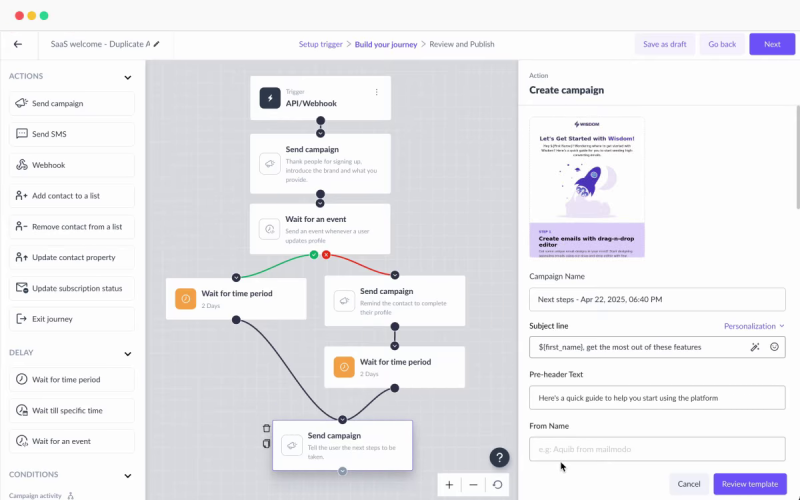
Mailmodo can be the most powerful weapon in the armory of Indian e-commerce businesses. It pioneered interactive AMP emails, which let recipients fill forms, schedule meetings, respond to surveys, and complete purchases without ever leaving their email app. This lets D2C businesses aggressively combat drop-off and cart abandonment rates. For Indian e-commerce brands, even a small improvement in conversion rate can mean a double-digit impact on their bottom-lines. Naturally, Mailmodo enjoys a strong, loyal user base among them.
The best part? Mailmodo is built in India, for the Indian audience. So, it supports local billing, invoicing, and compliance natively.
Mailmodo Pros
- In-email Interactive Widgets: Mailmodo lets email marketers embed forms, calculators, interactive games, booking calendars, surveys, and entire purchase pipelines within their emails. Subscribers never leave the inbox, thereby avoiding all distractions and obstacles to conversion. Mailmodo is the conversion hero for Indian D2C brands.
- Localized and Natively Compliant: Mailmodo offers INR pricing and GST invoices, making accounting straightforward for Indian businesses.
- Native Omnichannel Journeys: Visual automation journeys let email marketers combine multiple channels into a single journey. For instance, a rule can look like: if the recipient does not respond to email in 24 hours, trigger an SMS and a WhatsApp message with a discount coupon.
- AI-Powered Builder: Built-in AI lets users build prompt-driven email templates for campaigns, allowing even inexperienced users to create highly polished, stunning email campaigns.
Mailmodo Cons
- Expensive: Despite the usage-based pricing, the costs accumulate rapidly.
- Requires Google Whitelisting: Its advanced AMP features require businesses to undergo an initial whitelisting qualification with Google.
- Technical Issues: Once automations are created, any further edits do not retroactively apply to existing contacts in the automation.
Best For:
- D2C brands looking to maximize conversions from their email marketing campaigns
- App developers and tech startups in hubs like Bangalore, Hyderabad, Gurgaon, and Noida looking to create immersive in-email experiences for their tech-savvy audiences.
3. Brevo: High-volume Workhorse for Omnichannel Marketing
Brevo, previously known as Sendinblue, is a powerful tool that bundles email marketing, WhatsApp, SMS, and social media chatbots into a seamlessly integrated omnichannel ecosystem. Its core strength, however, is its creative pricing that is based on emails sent, not subscriber numbers. That makes it the favorite among Indian businesses who manage large databases of contacts but send communications infrequently.
Brevo Pros
- Native Multi-channel Marketing: Natively offers email marketing, WhatsApp API, SMS, and chatbots for Facebook Messenger, Telegram, and Instagram.
- Affordable Local Pricing: Its email volume-based pricing slashes costs for the vast majority of SMEs with high volumes of subscribers but low volumes of emails, such as in real estate. Also, billing is processed in INR with GST invoices.
- High India Deliverability: The French company has a local office in Delhi and has built a solid reputation and trust among Indian email infrastructure players. It enjoys high deliverability to Indian inboxes.
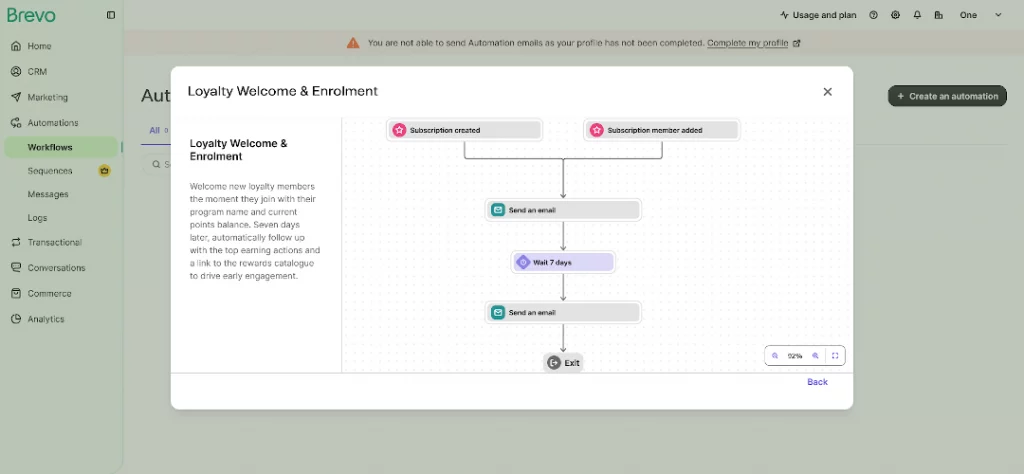
- Robust Visual Automation: Email marketers can devise “if-this-then-that” workflows, which look like this: if a customer places 5 orders, qualify the customer for higher-tier discounts, and disable regular discount emails.
- Strong Integrations: Brevo integrates effortlessly with Shopify, WooCommerce, Stripe, Salesforce, and even other email marketing tools like Klaviyo and HubSpot.
Brevo Cons
- Measly Free Plan: The forever-free plan supports only a maximum of 300 emails per month, which is ridiculously low.
- Relatively Simple Automations: Some of the competitors offer much more complex automations.
Best For:
- Small and medium businesses in India that have a huge subscriber database but only execute seasonal marketing campaigns, or highly targeted segment-specific campaigns.
- Businesses that need multichannel (email, WhatsApp, SMS, and social media messengers) marketing tools at affordable and scalable pricing
4. HubSpot: Enterprise-grade Tool for Fast-growing Businesses
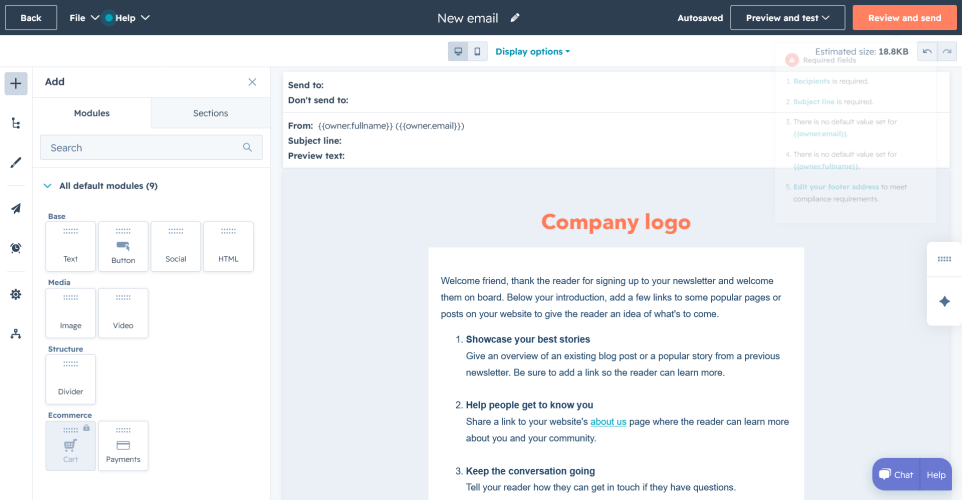
HubSpot doesn’t offer a standalone email marketing software. Instead, it’s baked into HubSpot Marketing Hub, a powerful marketing automation platform. Built-in email templates are nothing to write home about, but the drag-n-drop editor lets users create stunning, polished emails, forms, landing pages, and more. More importantly, HubSpot bundles its renowned CRM suite for unified management of sales, marketing, and customer service. That is a key differentiator for many Indian businesses. HubSpot’s local billing and GST invoicing are simply the icing on the cake.
HubSpot Pros
- Local Pricing and Billing: HubSpot processes billing in INR and provides GST-compliant invoices for businesses to claim input tax credit (ITC). They even include unique Invoice Reference Numbers (IRN)
- AI-powered Tool: HubSpot lets you dynamically personalize emails to recipients’ precise location, industry, and the data you’ve collected on them.
- Expansive Integration Ecosystem: HubSpot’s over 2,000 integrations with third-party apps, including Indian tools and databases, make it an ideal choice for many local businesses.
- Comprehensive Suite: Its broader ecosystem allows businesses to integrate everything from sales to marketing to customer support to accounting.
- Ultimate Inbound Machine: The easy drag-n-drop builder lets users create landing pages, popups, forms, and more, for aggressive lead scoring.
HubSpot Cons
- Relatively Expensive: It’s a premium toolkit, and even small businesses quickly exhaust the introductory free plans. Thereafter, the costs escalate rapidly.
- Paywall on Best Features: Some of the more advanced features are locked behind a paywall, so a premium plan is essential to unlock them.
- Complex: It has a steep learning curve simply because it’s rich with features.
Best For
- Fast-growing startups (especially in SaaS)
- Established corporate businesses
- Service businesses with high customer support ticket volumes
- SMS integration is available in higher paid plans only
5. Mailchimp: Best Tool for Established Enterprises
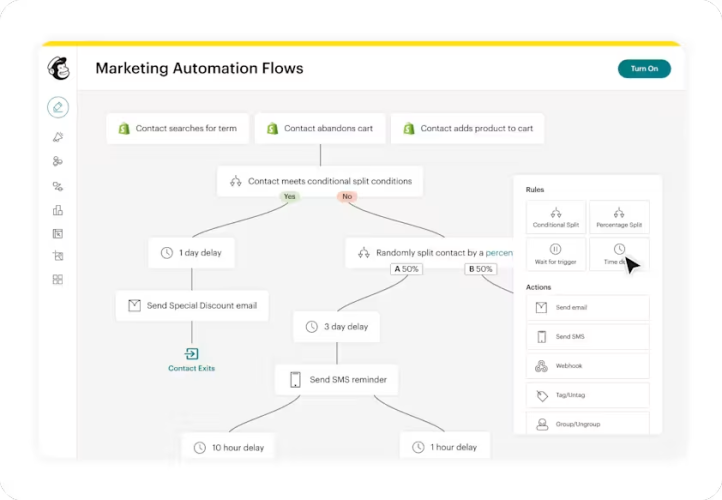
Mailchimp is the most recognizable name in the industry, globally. Its easy-to-use interface, and extensive third-party integrations have made it the default email marketing tool for new businesses. Its free plan certainly makes the decision a no-brainer for them. It’s one of the oldest email marketing softwares and enjoys strong loyalty in legacy corporations who value its extensive templates, predictability, and ease of use.
Mailchimp Pros
- Familiar UI: As the de facto beginner email marketing tool, Mailchimp enjoys widespread familiarity. Freshers, interns, external local marketing agencies – almost everyone is familiar with Mailchimp’s interface.
- Intuitive: In addition to extensive templates, the drag-n-drop builder makes designing new emails a breeze.
- Creative Assistant: Built-in AI generates instant on-brand graphics based on your website branding, saving you time and costs. It’s one of the more robust tools that do this.
- Plug-and-Play Ecosystem: Mailchimp’s massive app integrations let businesses seamlessly connect it to their Shopify, Salesforce, WooCommerce, and Squarespace stores, among others. For small outfits who value easy integrations over price, Mailchimp is a perfect match.
- Local Billing and Invoicing: Mailchimp supports INR billing and offers GST-compliant invoices to Indian businesses.
Mailchimp Cons
- Limited Free Plan: It has been severely defanged, with powerful features like automation now locked behind paywalls
- Expensive: Beyond the measly free limit of 250 contacts, the pricing scales aggressively, often multiple times higher than the competition.
Best For
- Brands and established businesses that value ease, integrations, and dependable performance over cost
6. Klaviyo: The Analytics Hero of D2C E-commerce Businesses
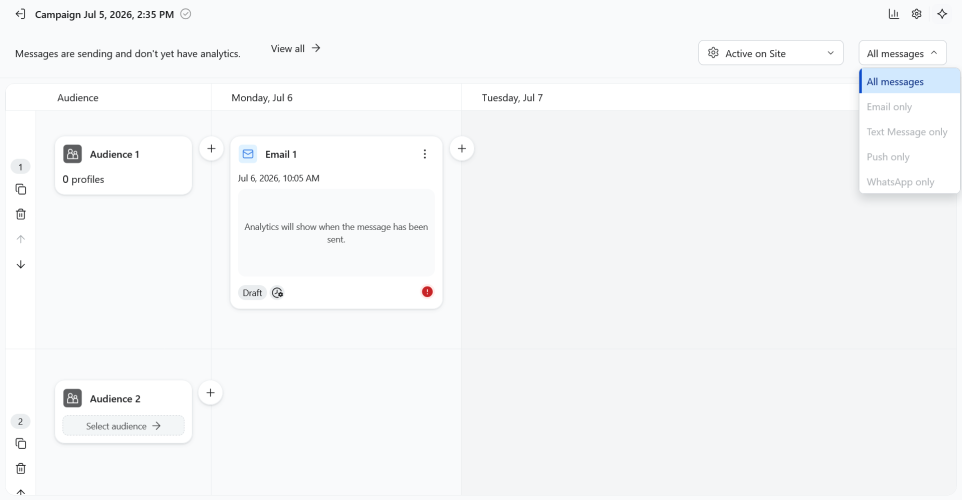
Klaviyo isn’t a traditional email marketing software. It’s an analytics powerhouse that lets email marketers deep dive into consumer behaviors, segment them with precision, and hyper-target them with high-conversion emails. Klaviyo tracks everything from browser history to purchase patterns to even individual product views, and then triggers targeted automation flows.
For Indian e-commerce businesses, Klaviyo is the powerful automation engine that unlocks not only analytics-driven insights but actual conversions and higher customer lifetime value (LTV). And it does all of it largely by itself, after the initial manual setup.
Klaviyo Pros
- Granular Segmentation and Targeting: Email marketers can create customer cohorts like “customers who have spent INR1,00,000 on electronics purchases last year but haven’t purchased anything in the last 60 days,” and then target them with personalized offers.
- Precise Revenue Attributions: Klaviyo can track and attribute e-commerce purchases with unmatched precision, right down to individual email blocks and automated flows, giving businesses deep insights into what’s working, by how much, and what’s not.
- Predictive Insights: Klaviyo’s AI excels at estimating customer churn risks and expected LTV with surprising accuracy for data-driven decision-making.
- WhatsApp Integration: Email marketers can seamlessly bounce between emails and WhatsApp messages within automated flows for an omnichannel marketing experience. However, WhatsApp integration requires local tech mapping.
Klaviyo Cons
- No Native SMS Support: Klaviyo does not offer native support for SMS in the Indian market
- No Local Billing and Invoicing: Billing is processed in USD and not INR. So, businesses incur higher costs on account of currency conversion charges and lost income tax credit (ITC).
- No Local Support: Klaviyo’s customer support is woefully lacking. There’s no local support available for Indian businesses. Further, email and live chat support are available only to premium customers (except for the first 60 days for free plan users). Depending on the subscription plan, the support could be available only during weekdays or all days.
- Expensive: Pricing gets expensive quickly with the increase in subscriber volume.
Best For:
- High-volume D2C brands with sufficient order volumes and data to actually utilize the full potential of Klaviyo’s powerful analytics-driven automation platform.
- Digital-first brands
7. ActiveCampaign: Most Cutting-edge Automation for Complex Sales Pipelines
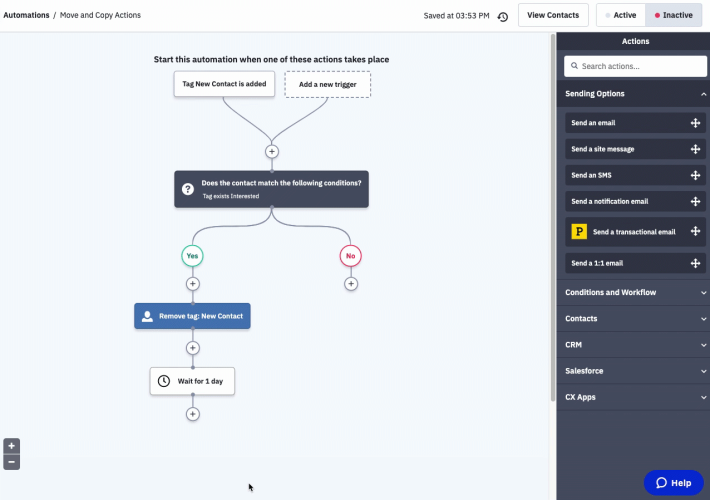
Think of ActiveCampaign as Klaviyo on steroids. It’s bigger, more powerful, and more goal-oriented than anything else in the market. ActiveCampaign is designed for businesses and industries with complex sales pipelines, such as medical devices, aerospace, real estate, etc., where decision-making involves a multitude of players and prolonged timelines. ActiveCampaign tracks users across a variety of touchpoints, digs into their behaviors, makes predictions, and personalizes engagement with them to score leads using AI and automation.
ActiveCampaign is more than an email marketing software. It’s a complete sales machine with a brain of its own. From deliverability infrastructure to security to conversions, ActiveCampaign excels at everything. Its predictive send time optimization alone can boost your open rates, CTRs, conversions, and revenues by timing your email sends.
ActiveCampaign Pros
- Hyper-Complex Automation Workflows: It lets email marketers build the most complex automation workflows using 135+ triggers and split-test entire paths.
- AI Builder: You don’t even have to build workflows using a drag-and-drop builder. Just feed text prompts to the AI, and it will build the workflow for your email campaign.
- Built-in Sales CRM: ActiveCampaign bundles sales CRM right into its email marketing suite. The tool automatically turns over engaged leads to your sales rep for a quick phone or WhatsApp follow-up.
- Predictive and Personalized Content: Once you create an email block in the flow, ActiveCampaign customizes everything from headlines to images in it based on where the recipient is in their journey, ensuring 100% contextual relevance.
- Predictive Sending: Whenever subscribers trigger automation workflows, ActiveCampaign doesn’t immediately send an email or wait for a generic 1-hour or 24-hour window. Instead, it analyzes the recipient’s historical open patterns and sends the communication precisely when they’re most likely to engage.
- Strong Infrastructure: ActiveCampaign manages the integrity of everything from deliverability infrastructure to compliance to ensure your emails land directly in the inbox, not the spam folder.
ActiveCampaign Cons
- Expensive: Use it only if your business genuinely needs its intelligent and sophisticated automation features.
- Steep Learning Curve: Its highly sophisticated setup requires professional training. For complete utilization of its powerful capabilities, a dedicated operational manager is pretty much essential.
- Lacks Localization: No INR pricing,no GST invoices, and no local customer support.
Best For
- Mid-size B2B businesses with complex and prolonged sales pipelines like enterprise SaaS businesses, high-end medical equipment vendors, defense contractors, heavy industrial machinery, and so on.
- B2C businesses targeting HNIs, like real estate syndicates.
8. Omnisend: Omnichannel Champ for E-commerce Businesses
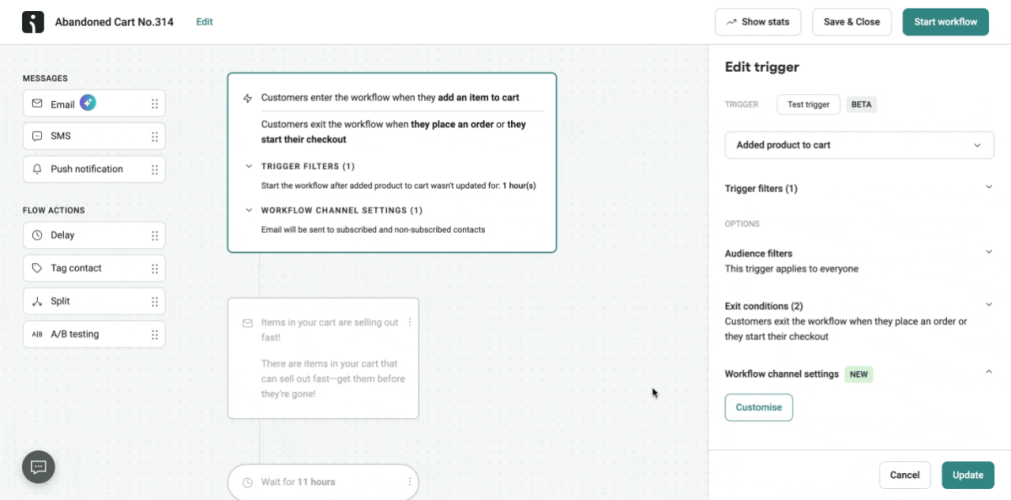
Omnisend is an excellent email marketing software for D2C brands and e-commerce businesses in India. It offers strong email plus SMS integration into its workflows, allowing email marketers to bounce seamlessly between the two channels in their flows. Armed with decent automation capabilities, strong SMS optimization, and deep Shopify integration, Omnisend offers an affordable pricing appreciated by fast-growing digital commerce businesses.
Omnisend Pros
- Omnichannel Automation: Combines email, SMS, and push notifications into a cohesive, integrated customer journey pipeline.
- E-commerce Automation Templates: Deploy welcome emails, abandoned cart sequences, and more with pre-configured templates in minutes.
- Scalable Pricing: Entry pricing is quite low and scales smoothly without exploding your budget, as your subscriber base expands.
- Third-party WhatsApp Support: Although Omnisend does not support WhatsApp natively, which is critical in the Indian context, third-party integrations make WhatsApp available to the ecosystem.
Omnisend Cons
- Lacks Localization: No India-specific pricing, billing, or GST invoicing.
- Lacks Local Support: No phone support or local support, although live chat and email support are available 24/7.
- Limited Automations: Omnisend’s analytics, segmentation, and automation capabilities are largely inferior to Klaviyo, the de facto leader among e-commerce brands.
Best For:
- Small D2C and e-commerce businesses who require intermediate-level features without the hefty pricing of the more advanced tools.
- Brands with multichannel marketing strategies, especially retailers who need a robust SMS plus email marketing tool.
9. MailerLite: Small Team Workhorse
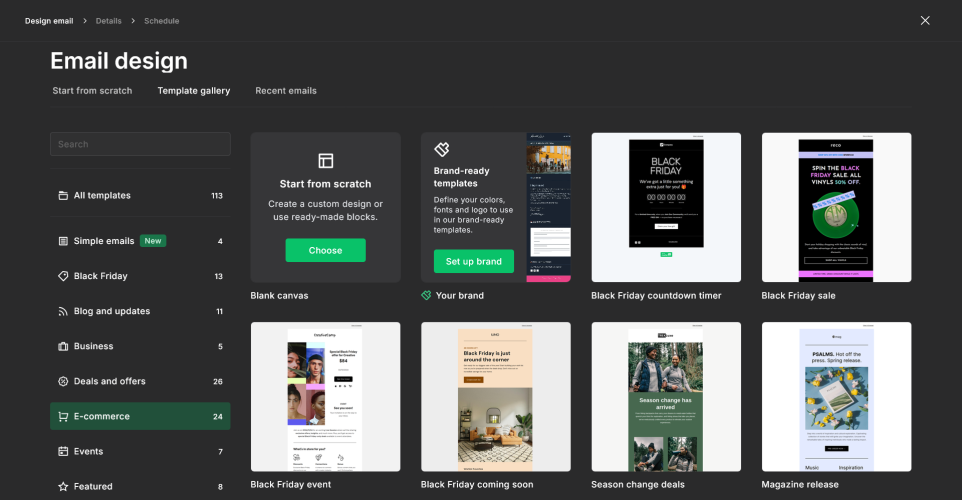
MailerLite is the best of the barebones email marketing softwares designed for solo marketers, boutique brands, small agencies, and local service providers. It’s a straightforward tool with an intuitive interface that lets users build stunning emails. The drag-and-drop builder makes it easy to use the tool for everyone, and doesn’t require the technical skills of a full-time email marketing expert. MailerLite’s email campaigns come out polished and professional, befitting an established brand. And, it does all this for an incredibly affordable price.
MailerLite Pros
- Intuitive Builder and Editor: Drag-n-drop builder makes it easy for just anyone to create stunning email campaigns, even without any prior experience.
- Generally High Deliverability: MailerLite enforces strict compliance standards on its users, especially on new accounts. They have a rock-solid reputation among major Western email providers like Gmail and Outlook, which translates to high deliverability, even in the Indian context.
- Highly Affordable: MailerLite’s starter plans are remarkably inexpensive, and the price scaling isn’t steep even at higher usage.
- Strong SMS Integration: SMS integration is baked into higher plans.
MailerLite Cons
- Absolutely No Localization: MailerLite processes billing in USD, GBP, and EUR only. That also means no GST invoices, India-specific compliances, or local customer support.
- Lacks WhatsApp Integration: A critical miss for Indian businesses.
Best For
- Solo entrepreneurs, freelance marketers, boutique agencies, independent creators, etc.
- Small service providers like coaching institutes
10. Kit (formerly ConvertKit): Favorite of Bloggers, Creators, and Freelancers
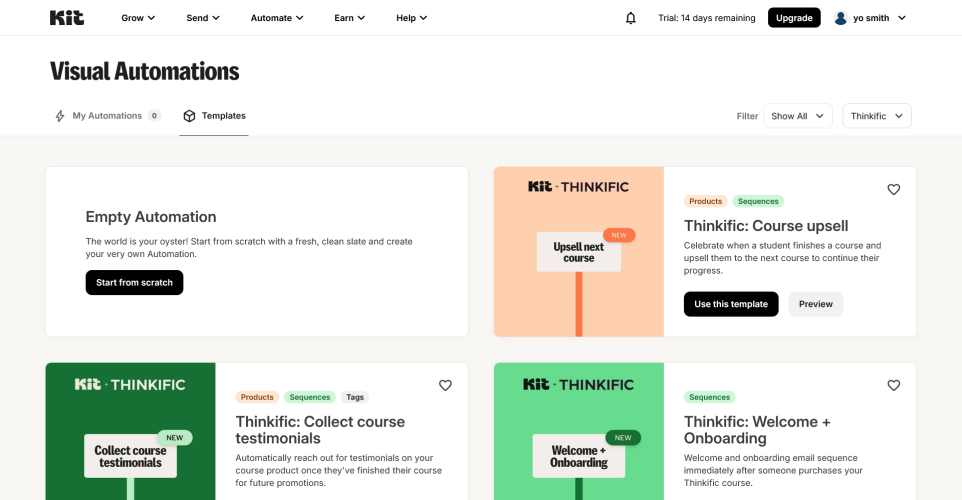
Kit is designed for selling digital products and subscriptions. It is uniquely tailored to the needs of the creator economy fueled by bloggers, podcasters, digital publishers, online educators, and so on. Kit emphasizes relationship building and monetization with text-driven emails, but it can handle a fair bit of complexity. With native features like landing pages, complex sequence setups, and subscriber segmentation, Kit is plenty useful to its target audience.
Kit Pros
- Generous Free Plan: Kit is free to use for up to 10,000 emails per month. Even advanced features like monetization are offered in the free plan.
- Easy Builder and Editor: A user-friendly drag-n-drop builder makes it easy for users to create stunning emails and newsletters. It also offers high-quality built-in templates for quick creation.
- Visual Full Funnels: Kit offers everything you need to sell your digital products and subscriptions, including marketing emails, landing pages, and payment integration.
- Segmentation: Kit scores your subscribers based on their loyalty to make it easy for you to personalize and make special announcements.
- Creator Network: Kit’s key differentiator is its creator network. It lets users collaborate with other users to run cross-promotions and scale organically.
Kit Cons
- No Localization: Kit’s transactions are processed by Stripe, which costs 3.5% to 4% of the transaction value. Also, it does not offer GST invoices or support India-specific compliances.
- Lacks Local Customer Support: There’s no phone support available, but live chat is available 24/7. There’s no India-specific support available either.
- No Omnichannel Support: There’s no native WhatsApp integration, but the SMS feature is available in a limited way.
Best For
- Independent journalists, content creators, boutique coaching centers, designers, freelancers, bloggers, podcasters, influencers, and so on.
Frequently Asked Questions (FAQ)
Final Thoughts
There’s no dearth of email marketing softwares offering India-specific pricing, billing, and customer support. However, some of the more sophisticated features like advanced automation are available only with global email marketing tools, which do not have a local presence in India.
So, the right email marketing tool for your business is the one that perfectly complements your business objectives and context. E-commerce businesses can choose between Mailmodo, Klaviyo, and Omnisend. Zoho Campaigns and MailerLite are no-risk choices for most businesses, including medium-size enterprises. Medium to large enterprises looking for sophisticated automation for complex workflows and analytics-driven conversions should look at ActiveCampaign.
Practically speaking, Indian businesses will benefit most by picking two or three tools from this list that best match their needs and use their free trial or free plan to test the service. Then, deliverability, tech integrity, and effectiveness in realizing business goals should be the primary criteria for evaluating the tools. Also, consider usability when setting up campaigns and flows. This hands-on comparison will tell you more than any top-10 lists.
If you’d like to know how MagicDart can help your business grow quickly using email marketing softwares, call us at +91-79869-10830, email us at [email protected], or drop us a message here.

Leave a Reply