
Content Marketing is the New SEO: How to Drive Organic Revenues in 2026
Content marketing for SEO builds helpful, relevant, and visible brands for businesses in the digital era, and pulls highly qualified traffic to them. But do you really need content marketing and SEO in 2026?
Well, let’s see. According to the UN’s ITU agency, 6 billion people worldwide now have access to the internet. And 5.66 billion of them are social media users, as per Data Reportal’s Digital 2026 Global Overview Report. They access the internet for everything from information to entertainment to shopping and more. Content marketing is how businesses create high-value content for internet users to engage with, and SEO ensures that content reaches the right audiences. Together, they have an amplifying effect on each other.
Key Insights in This Content Marketing + SEO Guide:
- How important is content marketing for SEO?
- How does SEO content marketing boost your search engine rankings and LLM citations?
- How to integrate content marketing and SEO together for 10X results?
- Blueprint for a high-performing SEO content marketing strategy
What is Content Marketing for SEO?
Content marketing for SEO is the strategic process of creating, optimizing, publishing, and maintaining valuable content that helps your target audience while improving your visibility in search engines.
SEO content marketing has two equally important objectives:
- Deliver genuine value to readers.
- Help search engines understand your expertise and relevance.
Since Google alone is responsible for 63.41% of website traffic, as per Datos and SparkToro’s data, businesses that don’t wish to burn cash on paid ads to pull this “freely available” traffic must invest in content marketing and SEO.
Key Objectives of Content Marketing for SEO:
- Build Visibility: By ranking for high-value keywords.
- Become an Expert: By building topical authority within your niche.
- Pull the Right Audience: By attracting qualified organic traffic.
- Build Reputation: By earning backlinks naturally.
- Become a Trusted Source of Knowledge: By increasing brand trust
- Boost Revenues Organically: By generating leads and sales without relying solely on paid advertising.
SEO content marketing achieves these objectives by combining two previously disintegrated components of digital marketing – content creation and search engine optimization (SEO) – into one seamlessly integrated force multiplier.
What is Content Marketing?
Content marketing is the strategic creation and distribution of valuable content to attract, engage, and retain an audience: blog posts, guides, videos, newsletters, and more, built around audience needs rather than product pitches.
What is SEO?
SEO (search engine optimization) is the practice of improving a website’s visibility in organic search results, spanning technical site health, on-page optimization, and off-page signals like backlinks.
Why Combine SEO and Content Marketing?
Content marketing and SEO aren’t competing disciplines. They’re two halves of the same job. Content marketing supplies the substance: original insight, useful frameworks, well-organized answers. SEO supplies the structure that makes that substance discoverable. It offers the research that tells you what to write about, the on-page signals that tell search engines what a page is about, and the site architecture that helps both crawlers and readers find related content.
In practice, content marketing for SEO usually means researching what your audience is actually searching for, creating content that answers those searches better than what currently ranks, structuring it, and optimizing the website around it, so that search engines can understand and reward it.
Why Content Marketing is More Important Than Ever for SEO in 2026
Search engines and SEO have drastically changed over the past few years. The mechanical SEO, characterized by simple keyword research and keyword-driven content creation, is effectively dead! Content marketing isn’t just a “part” of SEO anymore. It is the primary driver of organic search success.
Here are the key factors making content marketing imperative for SEO:
1. Zero-Click Search and AI Overviews Demand “Source-Worthiness”
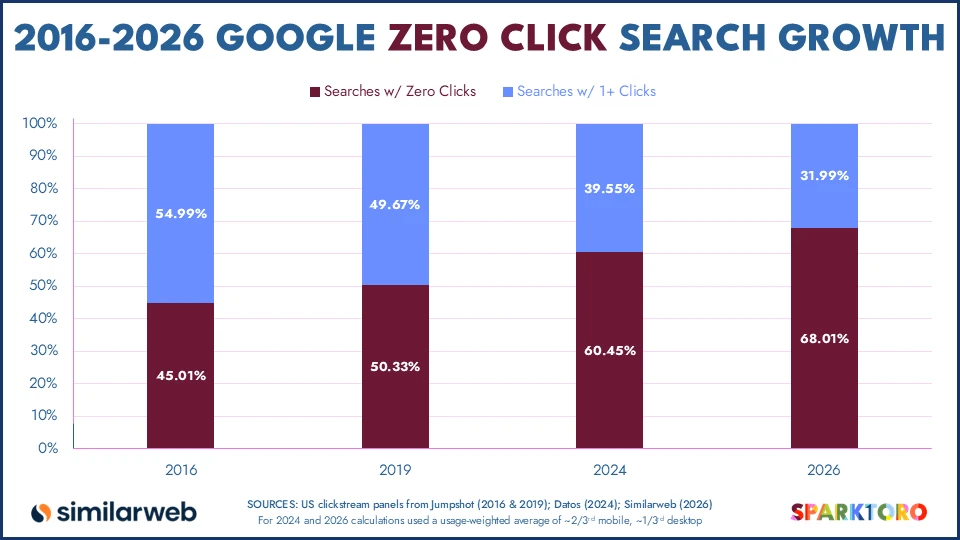
SparkToro’s early 2026 research reveals that 68.01% of all Google searches end without a click, thanks to AI Overviews. To survive this “zero-click” era, your goal is no longer just ranking #1 for a keyword; it is becoming the cited primary source inside the AI’s answer, whether it’s on Google or LLMs like ChatGPT Search, Perplexity, and Claude. That means understanding how AI citations work:
- Large Language Models (LLMs) do not extract answers from thin, keyword-stuffed articles.
- They pull quotes, statistics, and conclusions from deep, well-structured, original content marketing assets.
- The New SEO Reality: If your content isn’t authoritative enough for an AI to quote, you lose both search engine visibility and AI recommendation footprint simultaneously.
2. Search Engines Actively Target “AI-Generated Commodity Trash”
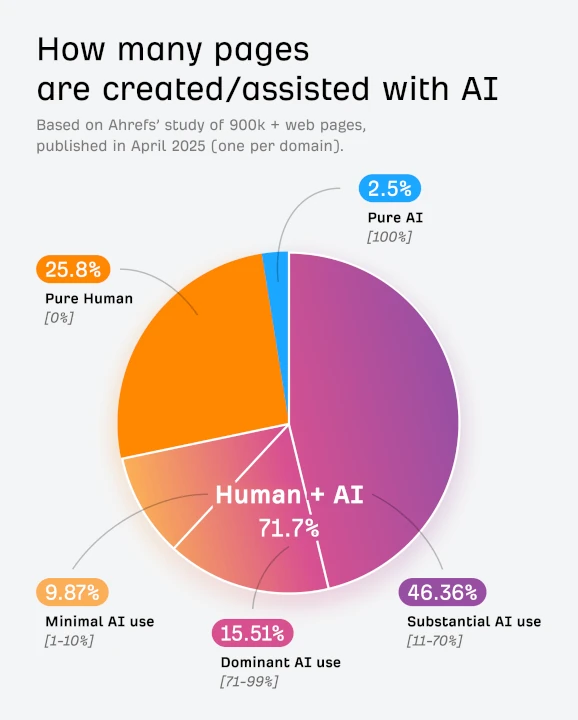
Text content creation is now an almost zero-effort task. Anyone with a smart device and internet access can churn out 10 long-form blogs in under 5 minutes, thanks to AI. And they do!
74% of new pages (Ahrefs, 2025), 71% of social media images (ArtSmart, 2025), and 59% of videos served to new TikTok accounts (Kapwing, 2026) are AI-generated. To fight this rapid proliferation of “AI slop,” search engines are penalizing thin AI content. To rank, content marketing must provide original value:
- First-hand experience and original screenshots.
- Proprietary data, case studies, or unique industry perspectives.
- Subject-matter expert interviews.
3. Google’s E-E-A-T Framework Requires Real Expertise
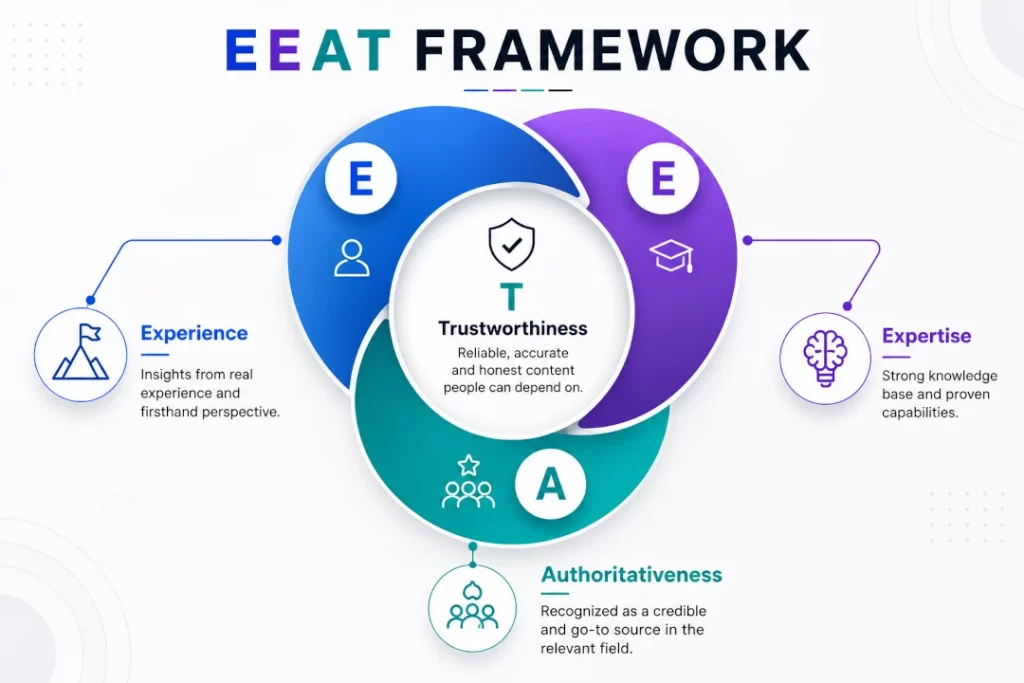
Google ranks content based on E-E-A-T (Experience, Expertise, Authoritativeness, and Trustworthiness).
Technical SEO (site speed, schema markup, clean architecture) opens the door, but E-E-A-T is what keeps you inside. You cannot “optimize” your way into E-E-A-T with technical tweaks. You can only demonstrate it through high-caliber content marketing. Content written by real experts with clear, verifiable authority is the single biggest factor protecting websites from algorithmic drops.
Today, content marketing-led SEO has evolved from a primarily technical job into a comprehensive authority- and trust-building activity, supported by technical SEO.
4. Search Intent Has Become Hyper-Complex
Ten years ago, a searcher typed 2-3 words into Google (e.g., “keyword research tools”). Today, users search with long, conversational, highly specific queries (e.g., “best keyword research tools that provide keyword difficulty and search volume stats”).
Static sales pages cannot rank for thousands of complex, long-tail variations. A robust content marketing strategy that utilizes topic clusters, detailed guides, comparison frameworks, and strategic FAQs allows you to capture intent across every phase of the customer journey, from initial problem awareness down to final buying decisions.
5. Backlinks Are Earned Through Content, Not Outreach Tactics
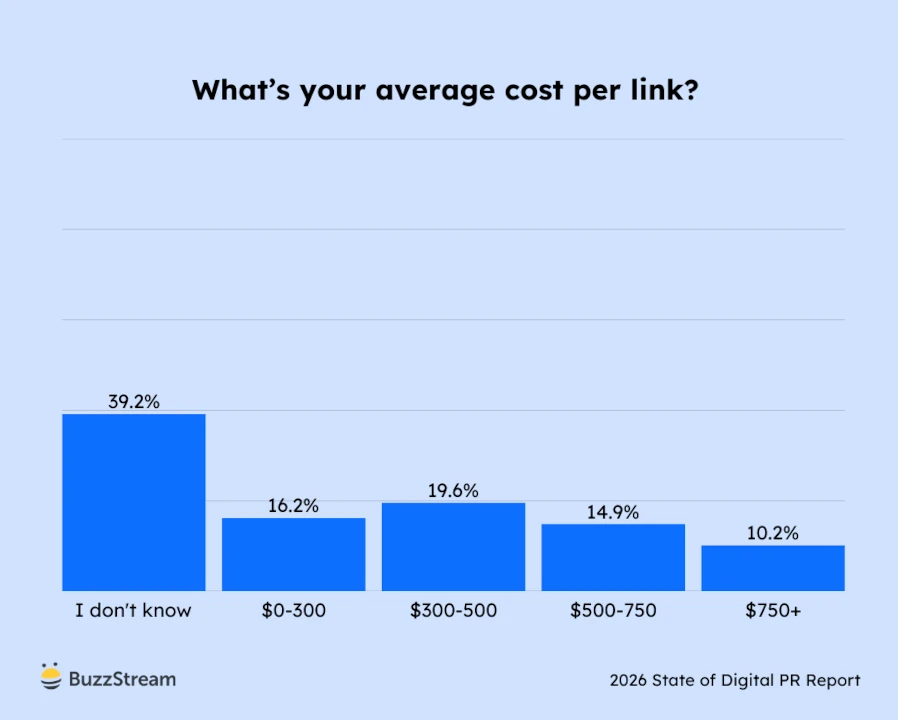
Cold-emailing webmasters to beg for backlink exchanges or buying low-quality guest posts yields diminishing returns (BuzzStream Report, 2026) and carries penalty risks.
Modern, sustainable link-building is entirely reliant on content marketing. High-value assets, often called link magnets, naturally attract editorial links from top-tier media and industry blogs:
- Original research reports and surveys.
- Free web calculators and interactive tools.
- Definitive industry benchmarks and infographics.
How to Do Content Marketing for SEO: 7-Step Guide
1. Prove the ROI of Content Marketing-led SEO
Whether you’re a growth marketing leader in an enterprise or a solo entrepreneur, do not rely on out-of-context vanity metrics like monthly website traffic, or raw impressions to impress your superiors or clients. They never do! Your choice of digital marketing channels should be based on metrics that truly matter to a business, such as those that directly affect the company’s bottom-line.
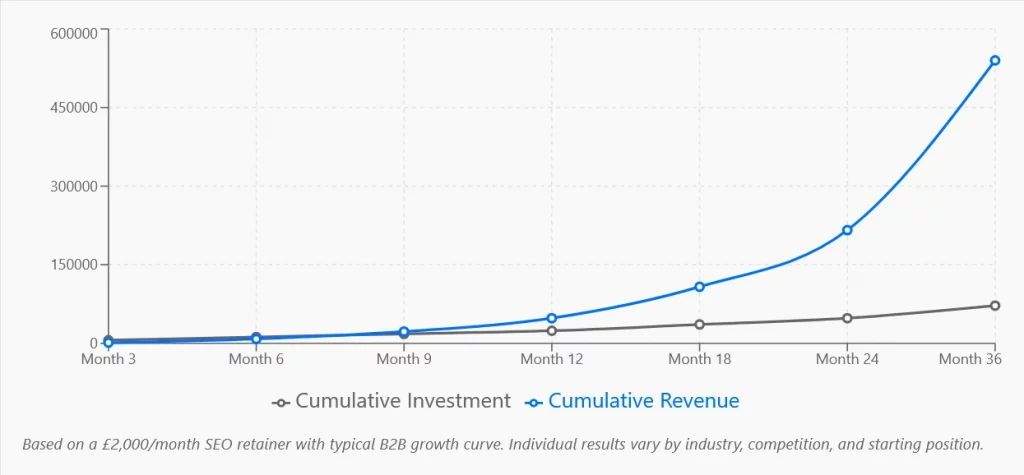
You can estimate the ROI of content marketing-driven SEO easily with some back-of-the-envelope calculations as follows:
Suppose one of your blog posts pulls a monthly traffic of 1,000 visits for a cluster of keywords, and the average CPC for those keywords is $3.20. The monthly traffic value of those 1,000 visits is $3200. That’s worth $38,400 (ignoring decay for simplicity) in the very first year of its publication. What if it’s an evergreen piece of content that you can refresh every year and keep riding on its success for years to come?
Note: You can use this SEO Value Calculator for a more accurate calculation.
Demand Metric estimates that the content marketing-and-SEO combo generates approximately 3x as many leads and costs 62% less than traditional marketing. Evidently, the potential for organic growth is staggering!
All you need is a carefully designed content marketing strategy built on robust SEO. And SEO content marketing will work like a self-sustaining engine. Technical search engine optimization establishes the indexing and speed infrastructure, while content marketing supplies the helpful, authoritative substance that search crawlers must find, index, and rank.
2. Conduct Deep Keyword Research
A successful organic content strategy aligns your assets with the user’s precise search intent. Targeting keywords solely based on raw search volume, without analyzing what the user wants to accomplish, leads to poor dwell times, high bounce rates, and missed conversion opportunities.
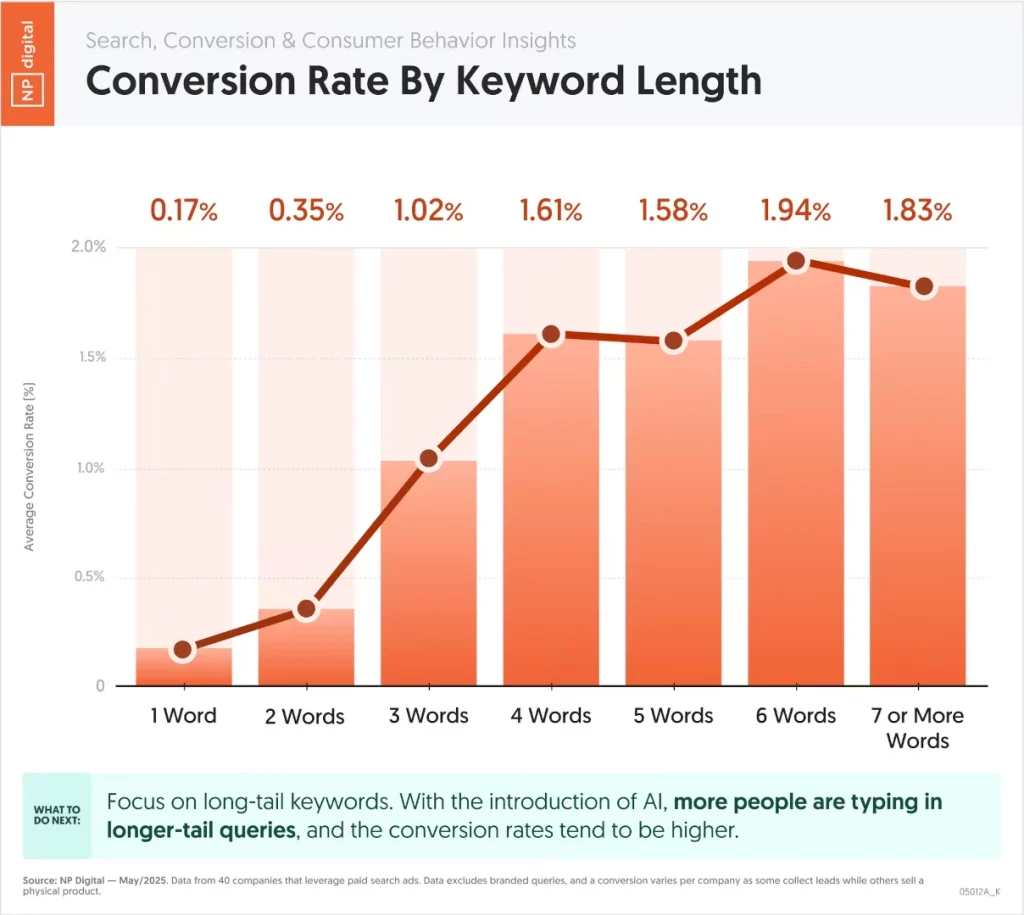
In fact, phrases with 7 words or more words converted over 10x better than phrases with just 1 word, as reported by NP Digital, 2025.
So, your keyword research must take a two-pronged approach:
i. Conduct Intent-Driven Keyword Research
To align content with user needs, growth teams classify keywords into four primary search intent categories:
- Informational Intent: The searcher wants to learn about a topic or find answers to specific questions. Lacking product-level readiness, they need educational blog posts, ultimate guides, infographics, or explainer videos.
- Navigational Intent: The searcher is looking for a specific brand, official website, or internal login page. Their destination is predetermined (e.g., “Ahrefs Keywords Explorer” or “Semrush pricing”).
- Commercial Intent: The searcher is actively researching products, services, or solutions. They are comparing options and weighing decisions, making them highly receptive to comparison guides (e.g., “Ahrefs vs Semrush”), honest product reviews, and detailed case studies.
- Transactional Intent: The searcher has decided to purchase or perform a specific conversion. They are looking for direct paths to buy, making ecommerce product pages, customized landing pages, or pricing tables the ideal match.
ii. Shortlist by Keyword Length and Specificity
Use SEO tools like Google Keyword Planner or UberSuggest to Understanding search query structures is critical when prioritizing keywords:
- Short-Tail Keywords: Broad, generic queries (usually 1 to 2 words) carrying high search volumes but also intense competition and low commercial intent.
- Medium-Tail Keywords: Semi-specific queries (usually 2 to 3 words) with moderate search volume and clear intent signals.
- Long-Tail Keywords: Highly specific, intent-rich phrases (usually 4 or more words). While long-tail queries carry lower monthly search volumes, they consistently drive significantly higher conversion rates because they align with a searcher’s precise transactional or informational needs.
3. Decode the Top Results in SERP: The Three Cs
Do not guess what type of content search engines want to rank. The first page of search results serves as an open blueprint. By analyzing the search results page, content teams can decode search intent using the “Three Cs” framework:
- Content Type: Identify the dominant style of content ranking in the top 10 positions. Are they blog posts, product category pages, landing pages, or video carousels? If blog posts dominate the results, users want independent educational resources rather than direct sales pages.
- Content Format: Determine how the top-ranking pages structure their information. Common formats include “how-to” step-by-step tutorials, ultimate guides, list posts (listicles), or product reviews.
- Content Angle: Identify the specific focus, unique hook, or angle used by top-performing pages. For instance, if the top titles frequently include the current year, the dominant content angle is providing the most up-to-date recommendations.
You can introduce more sophistication into your SERP research using a professional SEO tool like SE Ranking, which offers powerful SERP tracking features.
4. Build Topic Clusters Instead of Publishing Random Articles
Many websites fail to rank because they publish disconnected blog posts with no clear relationship to one another. Search engines evaluate topical authority, and prioritize websites that show deep, comprehensive coverage across an entire subject area. You can build such strong authority using a structured pillar-and-cluster content model.
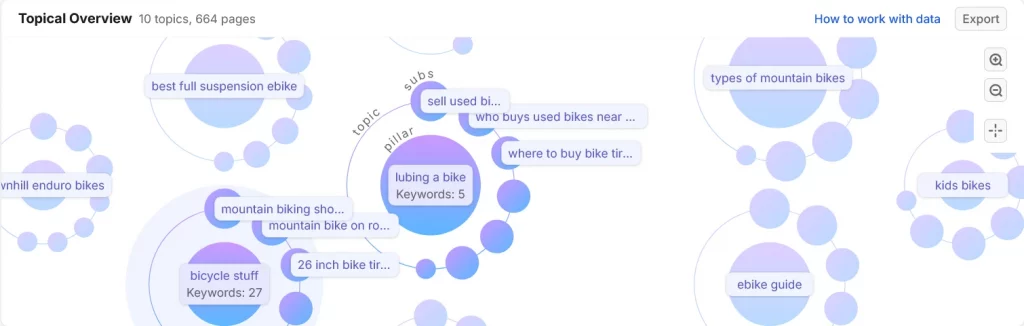
- Pillar Pages: A pillar page is a comprehensive, high-level resource (typically 3,000 to 5,000 words) that covers a broad core topic from multiple angles. It introduces all major subtopics without going into granular detail, linking out to supporting spoke pages.
- Cluster Pages: Spoke pages are highly targeted, in-depth articles (typically 1,500 to 2,500 words) that expand on a single specific sub-topic introduced in the pillar page.
- Hyperlink Equity Distribution: The pillar and cluster pages are connected by a system of internal links. The pillar page links out to every supporting spoke page, and each spoke page links back to the central pillar page. Where contextually relevant, spokes also link to other spokes in the same cluster to create a strong semantic network.
This structure does three things at once: it signals topical depth to search engines, it distributes internal link equity intelligently, and it gives readers a logical next step instead of a dead end. So, it’s no surprise that HubSpot has used this exact strategy to revolutionize their content marketing efforts.
5. Generate Brand Mentions and Backlinks
Earning high-quality backlinks remains a cornerstone of search engine optimization and AI brand visibility. Backlinks serve as a primary indicator of trust and authority, signaling to search engines that your content is credible and worth recommending.
However, obsessing over backlinks and developing them unnaturally can attract a Google penalty. A savvy link-building strategy takes a two-pronged approach:
i. Build Authority Signals Across Three Layers
Layer 1: Foundational Editorial Links:
These are high-quality, dofollow links that pass direct page authority and drive real referral traffic from trusted, topically related publications.
Layer 2: Contextual Citations:
These are brand mentions across authoritative websites, whether hyperlinked or unlinked. Modern search engines and AI models read these mentions to understand your brand’s topical associations.
Layer 3: Ambient Social Presence:
This represents natural brand mentions, discussions, and links in online forums, subreddits, and social platforms.
ii. Earn Links Naturally with Citable Assets
You can naturally attract authoritative Layer 1 editorial links by inserting highly linkable assets:
Original Proprietary Data:
Journalists, bloggers, and industry writers are constantly searching for statistics to support their points. Conducting original experiments or analyzing internal, anonymized data creates a unique resource that other sites must cite when referencing your data.
Interactive Utility Assets:
Interactive tools, calculators, templates, or checklists solve real problems for your audience. Placing these utility assets on their own unique URLs makes them highly linkable and easily shareable.
6. Continuous Optimization Protocol: Measure, Prune, and Refresh
Content marketing doesn’t end when you hit “Publish.” The value of digital content naturally decays over time. Competitors update their pages, facts and examples change, search intent shifts, and internal links become broken, causing organic rankings and traffic to erode. To maintain visibility, organizations must treat older content as an asset that requires quarterly calibration.
The 4-Step Content Audit Workflow:
Collect and Filter Your URLs:
Export your site’s search results data from Google Search Console (GSC) for the last three months, showing clicks, impressions, and average position for each URL. Review rankings, organic traffic, and click-through rate by page rather than only in aggregate.
Evaluate Performance
Segment your URLs based on traffic volume.
- High-Performing Pages: Keep these pages but audit them for freshness, ensuring all statistics, facts, tools, and internal links are current.
- Underperforming Pages: Identify pages that receive little to no organic traffic.
Identify Striking-distance Keywords and Target Them
Look for queries where you rank just outside the top results and prioritize those pages for improvement, since they’re often the fastest wins available. A keyword with decent volume for which your pages are ranking on page 2, for instance, can be targeted with purpose. By creating cluster articles around that topic or even enhancing an existing piece of content, you can rank on page 1 for such striking-distance keywords.
Run the Pruning Decision Workflow
For every underperforming page, answer a series of logical questions:
- Does the page have valuable backlinks? Check the page’s referring domains in Ahrefs. If it has backlinks but no traffic, consolidate its contents with a related page and implement a 301-redirect to preserve link authority.
- Is the page useful for another purpose? Determine if the page is essential for non-traffic reasons (e.g., Privacy Policy, Terms of Service, or brand landing pages). If yes, add a “noindex” tag to prevent search engines from wasting crawl budget on it.
- Is the page thin or outdated? If the page has no backlinks, no organic traffic, and holds no business value, delete it (404) to improve overall domain health.
7. Make Your Content “Retrieval-Ready” for GEO and AEO
SEO is rapidly evolving into search “everywhere” optimization (SEvO), a paradigm shift in response to the rapid adoption of LLMs, alongside search engines. And when a user enters a query, the AI engine does not rely solely on pre-trained information. Instead, it searches its database of crawled web pages, identifies relevant documents, extracts specific text blocks (chunks), and uses a generative model to synthesize a direct answer, citing its sources at the top of the interface.
Whether you’re targeting LLMs or not, making your content citation-ready increases the likelihood of your pages getting cited in AI Overviews in Google.
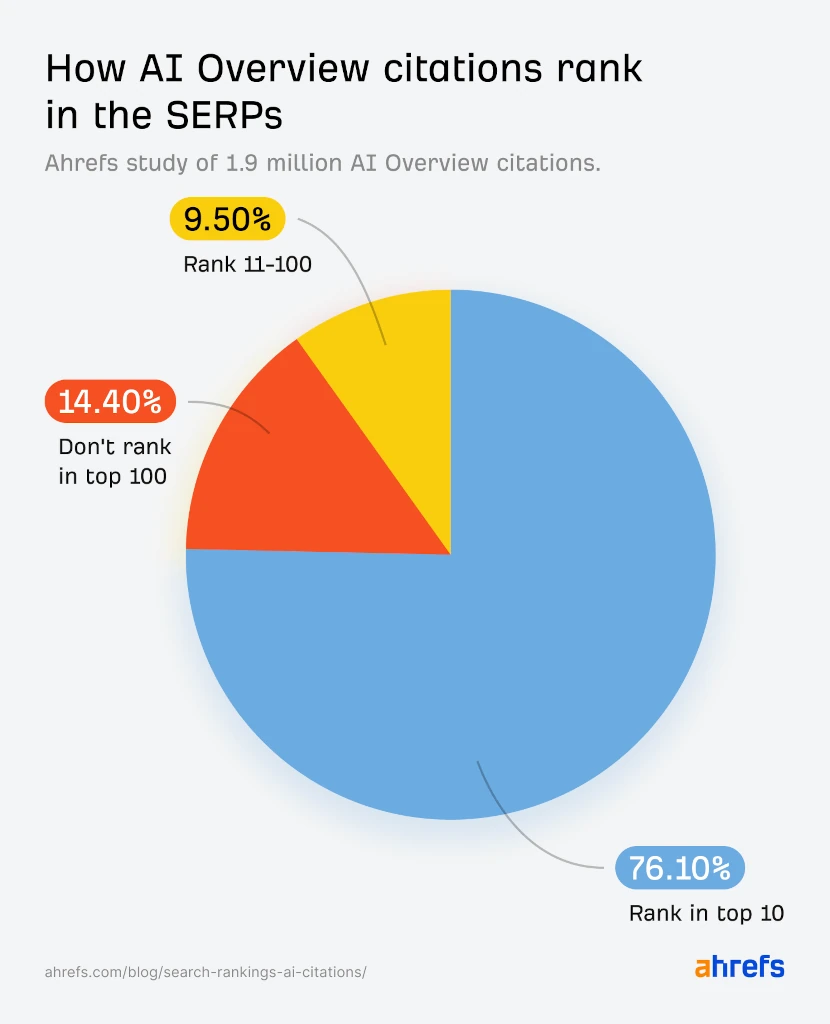
Since Ahrefs found that Google pulls 76% of citations for AI Overviews from the top 10 search results, your rankings matter too. So, implement these three structural techniques to ensure your content is easily retrieved, processed, and cited by AI engines:
Create Knowledge Bricks
AI retrieval models crawl and index web documents on a paragraph level rather than an entire page level. To optimize for these systems, structure your articles with clear, question-based H2/H3 headings. Directly beneath each heading, place a concise 40-to-60-word knowledge brick, a standalone, direct answer to the question implied by the subheading. These highly structured, direct paragraphs are easy for LLM retrieval systems to extract as clean, cited sources.
Entity-First SEO and Semantic Context
AI models build an understanding of topics by analyzing semantic relationships and mapping proper entities. Move away from vague references and use exact named entities, as part of the entity-first SEO framework.
Instead of writing “a restaurant chain,” write “Pizza Hut” or “Olive Garden”. Instead of referencing “latest SEO reports,” write “State of SEO 2026, Search Engine Journal” and hyperlink it. Aim for 15 to 20 named entities per 1,000 words to signal topical credibility to modern search crawlers and AI parsers.
Maximizing Information Gain
Google’s patent on its information gain scoring system offers insights into what it really means for SEO. Generating generic, “vanilla” summaries of existing search results is a quick way to get your content skipped by search algorithms. To stand out in highly competitive niches, content must offer information gain. It must offer unique value, firsthand data, or original perspectives that do not already exist on the results page. This is achieved by testing ideas in the real world, sharing internal company benchmarks, or interviewing active industry practitioners.
Highly effortful content, such as illustrated guides, proprietary surveys, or interactive web tools, creates a protective “moat” because it cannot be instantly replicated by a basic AI writing tool.
Key Learnings from This Guide
So far, you’ve learned:
- Justify Investment into SEO Content Marketing: By translating estimated gains in organic traffic volume from SEO content marketing into PPC ad expense for equivalent website traffic.
- Why SEO and Content Marketing Work Together: By giving structure and focusing your inbound marketing efforts where they can make maximum impact.
- How to Create Content That Gets Ranked and Cited: By building authority and trust on a foundation of experience and expertise that search engines and LLMs strongly value and deliver compounding returns.
- How to Help Search Engines and LLMs Surface You Better: By utilizing a mix of proven content structures, organic brand mentions, and continuous optimizations.
Frequently Asked Questions
Stop publishing random blog posts that don’t rank. Book a 15-Minute Strategy Call and let us map out a custom Pillar-and-Cluster roadmap for your brand.

Leave a Reply