
Best Day and Time to Send Email Marketing Campaigns In 2026
Ask any email marketing expert, “What’s the best day and time to send email marketing campaigns in 2026?” and they’ll usually respond with, “Tuesday, 10 AM,” nine out of ten times. In fact, this gospel is seared into the brain of every email marketing expert – novice or seasoned. However, as multiple recent studies have proved, there’s no one-size-fits-all solution for everyone! Fortunately, that doesn’t kick us back to square one.
For businesses that do not use email marketing as a major growth lever, the Tuesday, 10 AM schedule is a solid approach. However, for growth marketers targeting 36x or higher ROI (Email Marketing ROI Study, Litmus), we now know that the answer to this question is more complex and nuanced.
Still, if you’d like a simplistic answer, the best day and time to send email marketing campaigns to maximize different business goals like open rates, clicks, replies, and purchases is as follows:
Open Rates |
Clicks |
Replies |
Purchases |
|---|---|---|---|
Tuesday
10:00 AM – 11:00 AM |
Wednesday
10:00 AM – 11:00 AM |
Monday
5:00 AM – 8:00 AM |
Thursday & Friday
6:00 PM |
Key Takeaways From This Email Send-Time Optimization Guide:
- Best day to send email campaigns
- Best time of day for email marketing blasts
- Industry-specific advice on ideal days and times for email campaigns
- Goal-specific advice on ideal days and times for email campaigns
This post offers a comprehensive, data-backed masterclass on email send time optimization, backed by global benchmark data.

When is the Best Time to Send Email Marketing Campaigns?
The absolute best time to send marketing emails is the 10:00 AM – 11:00 AM time slot on weekdays, according to a Mailchimp study. Another study by One.com, however, claims the 8:00 AM – 9:00 AM slot to be your best shot for maximizing conversions.
Similarly, plenty of other studies offer conflicting data and benchmarks on what really is the ideal time for sending email campaigns. In reality, reports by email services like Mailchimp or One.com are usually skewed by their users.
Key Factors Affecting the Ideal Time for Sending Emails
-
Audience Type: B2C, D2C, and B2B email recipients, all respond very differently to marketing emails.
-
Industry Type: Whether your customers are in Retail, Healthcare, Education, etc. also affects the ideal time for sending emails.
-
Market Location: Consumers in the UK do not share similar metrics with those in the US and India, for instance.
-
Server Infrastructure Loads: Sender and recipient email servers often throttle sends and deliveries to off-peak time slots.
-
Business Goal: In most cases, the ideal time for maximizing open rates is not the same as the one for maximizing purchases.
-
Time Zone: If your audiences are in multiple time zones, you must schedule emails to land in their inboxes at their ideal times, not yours.
What is the Best Day to Send Email Marketing Campaigns?
According to a HubSpot study, the best day to send marketing emails is Tuesday. Meanwhile, Coschedule’s study, in disagreement with HubSpot, offers Thursday as the ideal choice for email marketers.
Once again, we can see that there’s hardly any consensus on what’s the best day for sending email campaigns. And the reasons are similar to what affect the best time.
Key Factors Affecting the Ideal Day for Sending Emails
-
Audience Type: Consumers and businesses (or professionals) respond very differently to marketing emails.
-
Email Type: Newsletters, cart abandonment emails, promotional campaigns, event reminders, and other email types have vastly different response patterns.
-
Industry: Engagement patterns of ecommerce, SaaS, healthcare, finance, nonprofits, and education, all differ substantially.
-
Cultural Differences: Geography and culture play a significant role in engagement. In some regions, the Friday-Saturday period is the weekend. Likewise, in some religions, business is a “no-no” on weekends.
Email Scheduling for Business Goals: Visibility vs. Action
To optimize send timing, campaign goals must be aligned with the cognitive bandwidth of the recipient. A critical mistake in email strategy is treating email opens and email clicks as behaviors occurring under identical psychological conditions. Empirical research confirms a fundamental behavioral split between Visibility Windows and Action Windows.
The Morning Visibility Window (8:00 AM to 11:00 AM)
The 8:00 AM to 11:00 AM window represents the primary visibility window across both B2B and B2C segments. Microsoft’s 2025 report indicates that 40% of online knowledge workers check their inboxes by 6:00 AM, with peak inbox review activity occurring between 8:00 AM and 11:00 AM. During this window, emails experience high top-of-inbox placement, leading to elevated raw open rates.
However, morning check-ins hardly translate to high engagement. The same study found that email recipients spend less than 60 seconds on average skimming through them. Knowledge workers scan quickly to clear mental clutter before launching into daily meetings and core tasks. Evidently, a morning dispatch yields strong visibility, but a large percentage of non-urgent promotional emails are rapidly archived or skimmed without clicking.
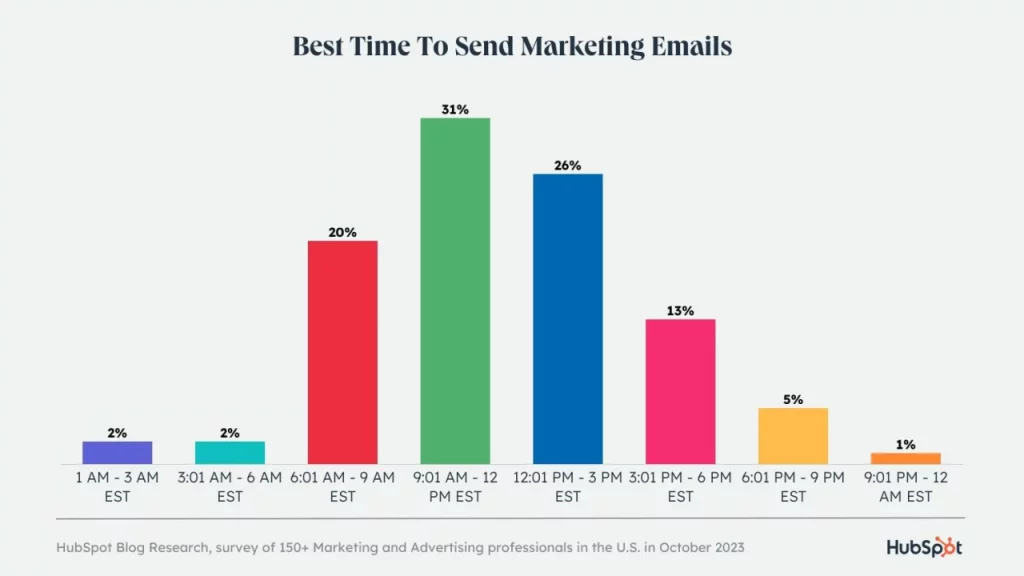
This coincides with the HubSpot report, which shows engagement time peaking between the 9:01 AM and 12:00 PM window.
The Evening Action Window (8:00 PM to 10:00 PM)
Email recipient engagement behavior shifts dramatically during late evening leisure hours. Dataset analysis from Moosend (10 billion emails) demonstrates that Click-Through Rates (CTR) peak globally between 8:00 PM and 9:00 PM. For instance, campaigns sent at 9:00 PM on Mondays hit a global peak CTR of 9.01%.
Moreover, dispatches sent at 8:00 PM achieve average open rates of up to 59%, compared to 45% for 2:00 PM sends, due to drastically reduced inbox competition at night.
In a stark contrast to Moosend’s data, Omnisend data on 9 billion emails found 12:00 PM to be ideal for generating conversions and 4:00 PM for clicks.
From the two studies, it’s clear that during evening “sofa time,” recipients have the cognitive bandwidth required to read long-form editorial newsletters, evaluate commercial offerings, and complete multi-step calls-to-action. At the same time, midday break times or lunch times are characterized by peak mental activity, when consumers are most inclined to evaluate and make purchase decisions.
Make Room for the Open Rate Pitfall: Apple MPP
The deployment of Apple Mail Privacy Protection (MPP) across iOS devices automatically pre-loads tracking pixels on behalf of users, artificially inflating reported open rates by up to 45%, as per AcelleMail.
Because automated pixel pre-loading distorts raw open timestamps, relying solely on open rates to determine optimal send times leads to flawed conclusions.
Modern optimization strategies must shift toward verified engagement indicators such as Click-Through Rate (CTR), Click-to-Open Rate (CTOR), Reply Rate, and Direct Revenue Per Send (RPS).
For email marketers like us, the writing on the wall is clear: focus on metrics that track audience actions, not visibility.
Best Day and Time to Send Email Blasts for Different Business Objectives
We’ve combined insights from multiple email service providers’ reports to generate a coherent send optimization playbook for businesses in both B2B and B2C domains. It is in alignment with insights obtained from trillions of signals captured by Microsoft, giving these recommendations the high confidence of empirical research.
| Day of Week | Primary Metric Leadership | Optimal Dispatch Window (Local Time) | Psychological Mechanism & Insights | Primary Conversion Goal |
|---|---|---|---|---|
| Monday | Best for Cold Email Replies | 5:00 AM – 10:00 AM | Early morning executive review. Monday 5–8 AM cold sends hit top reply rates. | Cold B2B replies & initial broadcast exposure |
| Tuesday | Best for Maximizing Open Rates | 9:00 AM – 11:00 AM; 1:00 PM – 3:00 PM | Highest engagement. Peak mid-week operational focus. Tuesday afternoon leads B2C sales. | Brand visibility & top-of-funnel traffic |
| Wednesday | Best for High Consumer CTRs and B2B Replies | 10:00 AM – 11:00 AM; 2:00 PM – 4:00 PM | Mid-week operational velocity. Wednesday leads cold outreach reply rates at 0.48% alongside Thursday. | Meeting bookings & lead form submissions |
| Thursday | Best for ROI and Conversion Maximization | 9:00 AM – 10:00 AM; 6:00 PM – 7:00 PM | Pre-weekend commercial planning; leads in revenue per send, globally. High-quality B2B replies. | E-commerce sales & cart completion |
| Friday | Best Single-Send Open Spikes; Highest B2C conversions | 8:00 AM – 9:00 AM; 6:00 PM | Workweek wind-down. Friday 6:00 PM achieves peak single open alignment (49.7%). Friday 8 AM leads urgent sign-ups. | Immediate leisure, event & dining conversions |
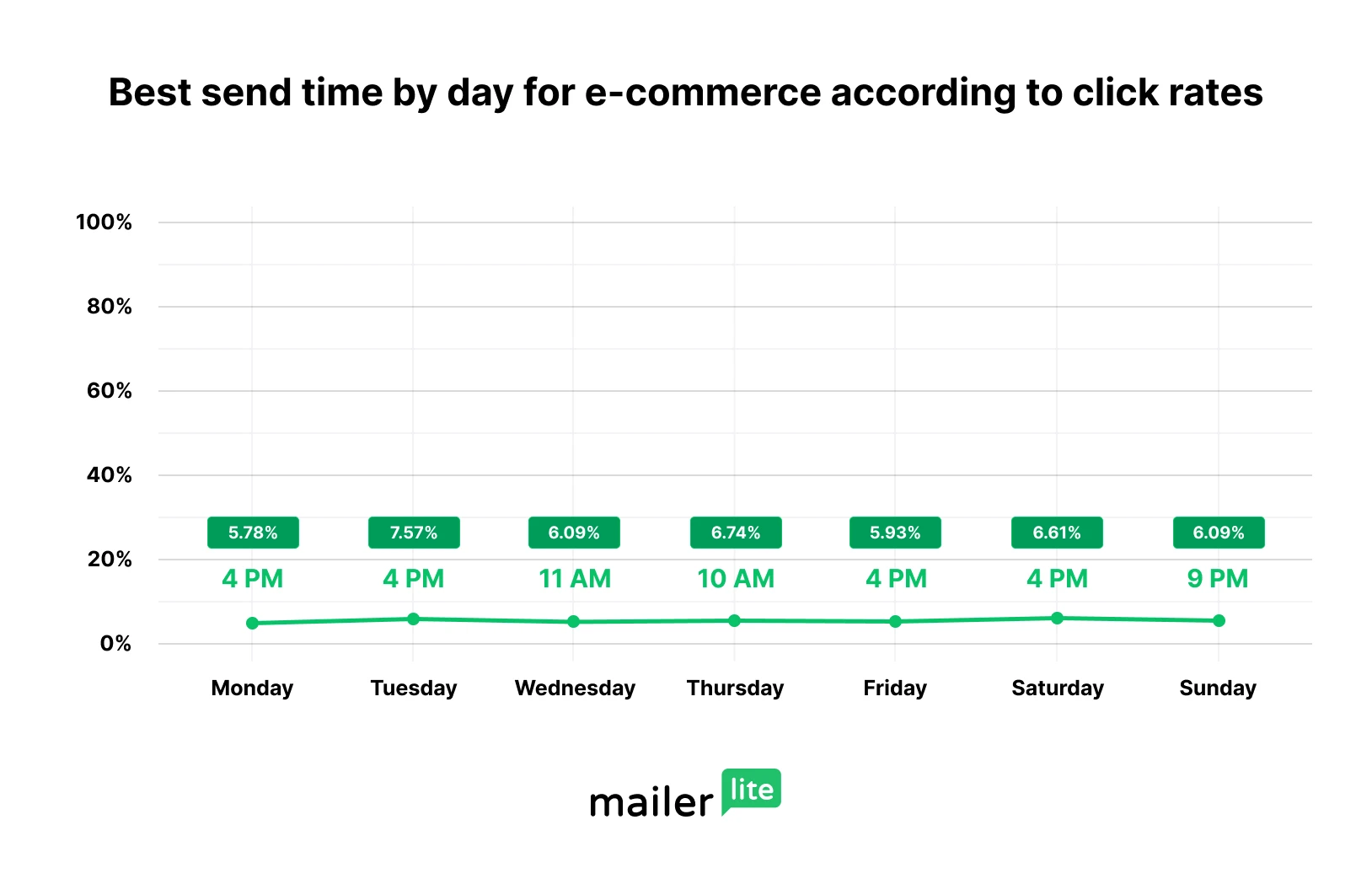
| Saturday | Best for Minimizing Inbox Competition | 7:00 AM – 9:00 AM; 4:00 PM | Reduced inbox clutter and high open rates in mornings. 4:00 PM yields elevated click rates (6.61%) for retail offers. | Promotional retail & lifestyle offers |
| Sunday | Best for Subscriber Retention; Emails, Newsletters, etc. | 8:00 AM – 9:00 AM; 6:00 PM – 9:00 PM | Week planning behavior. Sunday 8 PM – 10 PM offers low competition, high CTR, and high CTOR for deep reading. | Long-form editorial reading & low unsubscribes |
Monday: The Strategic Re-Entry
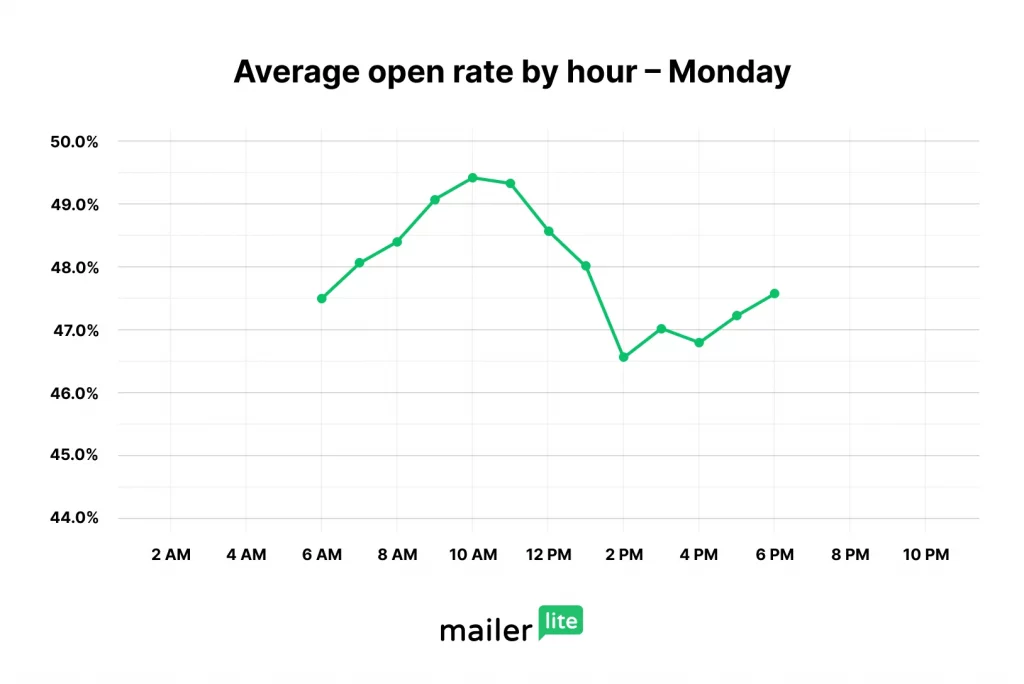
Early morning sends between 5:00 AM and 8:00 AM yield exceptional response rates for cold B2B outreach, averaging a 2.3% reply rate. Furthermore, Monday evening at 9:00 PM registers a global peak CTR of 9.01% as professionals review personal communications before the Tuesday work surge.
Tuesday: The Weekday Workhorse
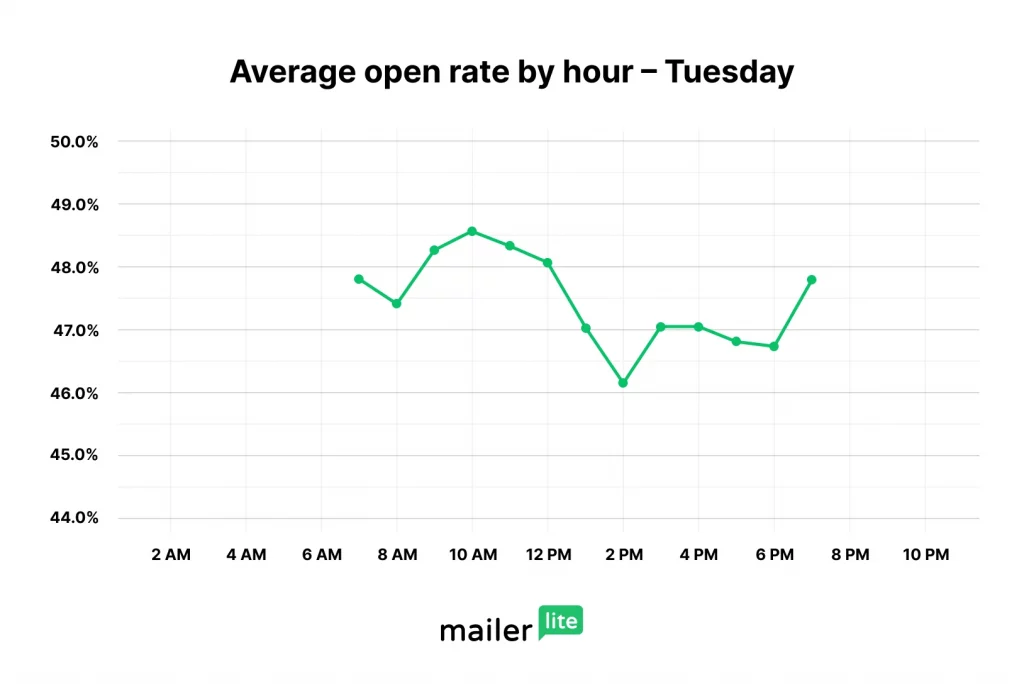
Tuesday remains the standard benchmark for sheer broadcast volume. 27% of marketers still swear by Tuesday morning email sends for consumer engagement. B2B marketers, especially in SaaS and high-ticket software industry, report strong engagement from their audiences in late afternoon hours.
Wednesday: The Mid-week Momentum Engine
Belkins’ study of 7.5 million emails found that Wednesday shares the highest reply rates among weekdays with Thursday. The mid-afternoon window (2:00 PM to 4:00 PM) performs exceptionally well for demo requests and webinar registrations.
Thursday: The Money-making Conversion Leader
Thursday is the premier day for generating direct commercial revenue. As the workweek nears completion and consumers begin pre-weekend planning, promotional emails sent on Thursday between 6:00 PM and 7:00 PM generate higher revenue per send than any other weekday dispatch.
Friday: The Consumer Action Spike
While general B2B engagement drops on Friday afternoons, specific verticals experience substantial performance surges. MailerLite benchmark data shows that Friday at 6:00 PM achieves the single highest open rate alignment point of the entire week at 49.7%. It serves as a prime window for hospitality, dining, entertainment, and weekend leisure offers.
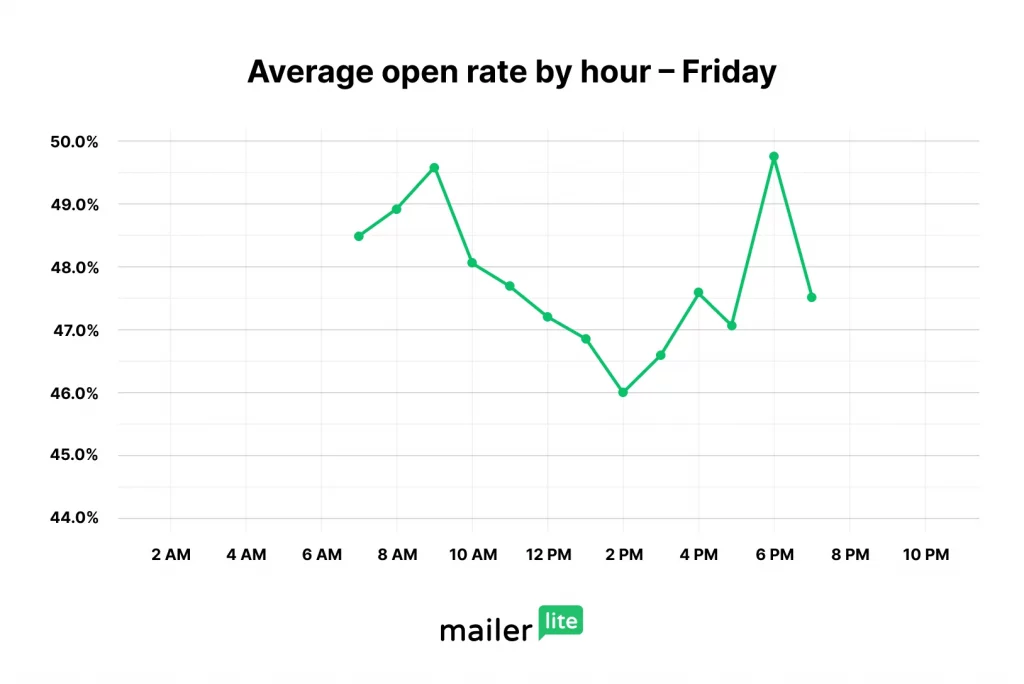
The weekend shopping and entertainment prep window after work makes Friday, 6:00 PM the ideal window for local sales conversions.
Saturday: The Low-Clutter Shopping Window
Saturday witnesses the lowest email campaign sends on account of low engagement from recipients. However, it also creates an opportunity for retail brands. MailerLite datasets reveal that Saturday inbox placements at 4:00 PM yield an impressive 6.61% CTR, making it an effective window for consumer promotions and e-commerce flash sales.
Sunday: The High-Retention Window
Sunday evening between 6:00 PM and 9:00 PM catches “prep-for-the-week” mental transitions. Subscribers reviewing their inboxes on Sunday night display higher Click-to-Open Ratios, peak click-through rates (2.6%), and lower unsubscribe rates, making Sunday night an ideal window for high-value editorial content, long-form newsletters, and community updates.
Industry-Specific Email Send Time Optimization
A major flaw in baseline email research is applying generic averages across contrasting industries. Send time mechanics must be tailored to the daily workflow of specific target personas.
Day-wise segmented analyses of send time effectiveness are certainly an improvement compared to sweeping generalizations. However, they’re still hardly granular enough to offer actionable insights for businesses. Send time mechanics must be tailored to the daily workflow of specific target audiences and industries.
| Industry-Specific Email Send Optimization Tips | |||
|---|---|---|---|
| Industry & Sector | Primary Window (Local Time) | Secondary / Peak Windows | Key Insights & Conversion Mechanism |
| 1. B2B & Enterprise SaaS |
Tuesday – Thursday 9:00 AM – 11:00 AM |
Cold Prospecting: 5:00 AM – 8:00 AM Post-Lunch: 1:00 PM – 2:30 PM | Early morning sends yield 4x higher meeting rates (0.4% vs 0.1%). Post-lunch window captures mid-day transition focus. |
| 2. E-Commerce & D2C |
Tuesday & Thursday 4:00 PM – 6:00 PM |
Sofa Time: 8:00 PM – 10:00 PM Weekend: Sat 4 PM & Sun 8 PM | End-of-day sends align with paycheck reviews. Late evening drives peak purchase conversions, while weekend surges boost promotional CTR. |
| 3. Nonprofits & Cause-Driven |
Friday 8:00 AM & Sunday 8:00 AM – 9:00 AM |
Mid-Week Evening: Tue – Thu, 5:00 PM – 7:00 PM | Targeted around non-work reflection periods that encourage values-based commitments and donor engagement. |
Industry 1: B2B and Enterprise SaaS
B2B email engagement is strictly bounded by professional corporate schedules. The core operational window spans Tuesday through Thursday from 9:00 AM to 11:00 AM local recipient time. A secondary engagement window occurs post-lunch between 1:00 PM and 2:30 PM as professionals clear inboxes between meetings.
For cold B2B sales prospecting, multi-million send data from Belkins exposes a dramatic performance divergence:
-
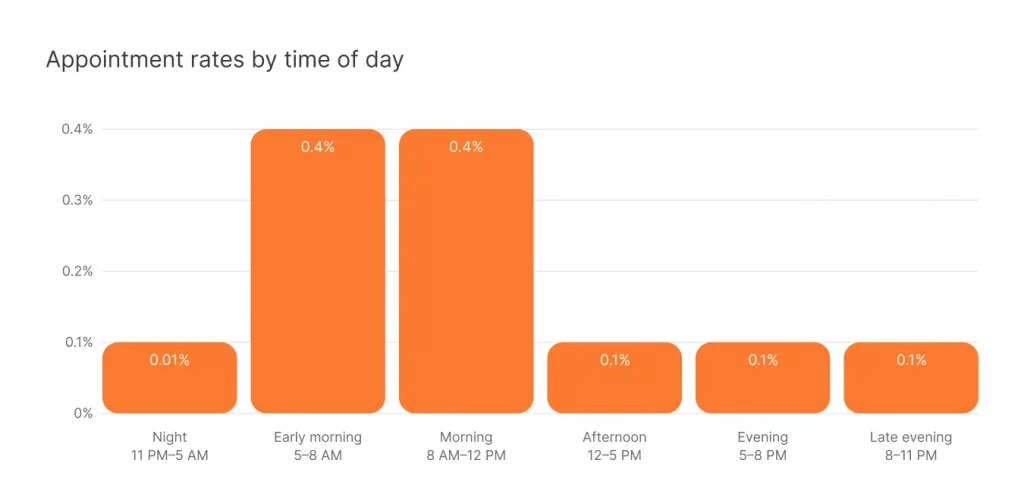
Morning Sends (8:00 AM – 12:00 PM) and Early Morning Sends (5:00 AM – 8:00 AM): Achieve a 0.4% meeting booked rate.
-
Afternoon Sends (12:00 PM – 5:00 PM): Drop to a 0.1% meeting booked rate.
Morning prospecting emails land when C-suite executives and decision-makers are conducting early morning mobile inbox reviews before back-to-back meetings begin. Reaching an executive between 5:00 AM and 8:00 AM produces four times more booked meetings than an afternoon dispatch.
Industry 2: E-Commerce and Direct-to-Consumer (D2C) Retail
Consumer retail campaigns thrive during non-work leisure hours and transition periods. Peak transaction conversion rates consistently occur around 3:00 PM on Thursdays, coinciding with end-of-week paycheck allocations and shopping preparation.
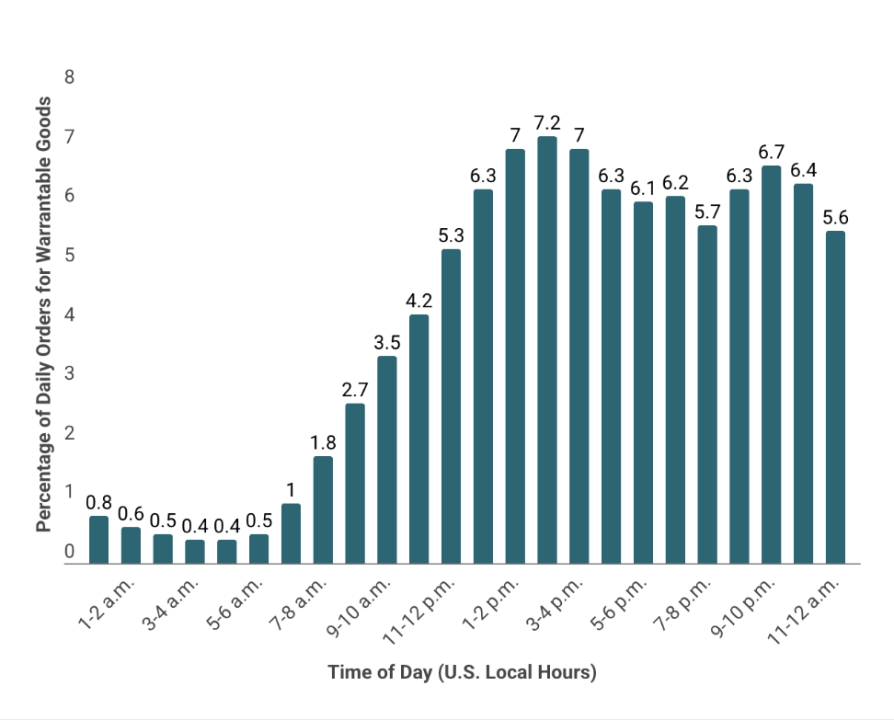
A secondary conversion surge emerges during evening leisure hours between 8:00 PM and 10:00 PM. Retail marketers should schedule promotional broadcasts for late afternoon (4:00 PM) or evening (8:00 PM), while leveraging weekend slots (Saturday at 4:00 PM and Sunday at 8:00 PM) for catalog browsing and lifestyle campaigns.
Industry 3: Nonprofits, Higher Education, and Cause-Driven Entities
Nonprofit and charitable campaigns achieve maximum financial contribution rates when sent during reflective non-work windows. Campaigns sent on Friday mornings at 8:00 AM and Sunday mornings between 8:00 AM and 9:00 AM generate the highest donation conversion rates per deliverable email, according to a Neon One report. Subscribers are more emotionally receptive to cause-driven messaging when detached from professional work stress.
However, if you’re aiming for high open rates and engagement only, perhaps the 3:00 PM – 4:00 PM window on Tuesday and Thursday is a better choice, according to Brevo.
Email Server Infrastructure and Off-Peak-Hour Scheduling
An infrastructure factor frequently overlooked in marketing literature is Mail Transfer Agent (MTA) queue congestion. Commercial email automation platforms (such as HubSpot, Zoho Campaigns, Mailchimp, Klaviyo, and Brevo) default to sending scheduled campaigns precisely on the top of the hour (:00) or on the half-hour (:30).
Imagine millions of marketing emails hit global Internet Service Providers (ISPs like Gmail, Yahoo, and Outlook) simultaneously at 10:00 AM. To prevent mailbox providers’ (MBPs) servers from crashing, internet service providers (ISPs) temporarily throttle and hold incoming messages in queue delays lasting anywhere from 15 to 45 minutes.
How to Avoid Peak-hour Email Throttling
To bypass ISP queue congestion altogether, marketers should schedule email campaigns at off-peak minutes such as :07, :21, or :36.By dispatching at 10:07 AM instead of 10:00 AM, your message bypasses the top-of-hour email queue spike, landing directly at the top of the recipient’s inbox at the exact moment they open their application after completing a top-of-hour meeting transition.
Limitations of Empirical Research and the Need for Continuous A/B Tests
The extensive empirical research data we’ve covered so far offers a good starting point -a strong foundation – to kickstart your high-conversion email marketing campaign. But, it’s far from perfect. A wide variety of niche factors could drastically change the ideal time and day windows for your specific business context.
Therefore, the best strategy is to begin experimenting with different days and time slots, evaluate campaign performance, and choose send times that deliver desired business goals. Of course, this requires persistent experimentation to capture emerging trends, evolving consumer habits, and other factors in play.
Key Limitations of Empirical Research on Email Send-time Optimization
- Law of Averages: The averages of aggregate data smooth over any variations in different segments. For instance, an email service provider could be popular among D2C brands and their data could be heavily skewed by ecommerce audience behavior, completely masking variations in B2B audiences.
- Seasonal Effects: Performance during holiday seasons, major sales events, or summer months may not reflect year-round patterns.
- Cultural and Geographic Factors: In cultures with strong work-life balance, professionals may not open their work emails until they’re in the office. So, early morning emails usually get shoved down by morning emails that land on top of them.
- Selection Bias: The reports we’ve discussed so far were almost exclusively created by email platforms. After all, they only have access to “their” customers’ data, which may not represent all businesses or audiences.
Take Advantage of Predictive Send Time Optimization (STO)
While A/B testing provides a reliable operational guide, it requires far too much effort and time than what most marketers can allocate. So, the ultimate evolution of email scheduling lies in Algorithmic Predictive Send Time Optimization (STO).
Predictive Send Time Optimization (STO)
- Log Subscriber Behavioral Telemetry (Opens, Clicks, Conversion Time)
- Construct 90-Day Rolling Recipient Engagement Profile
- Machine Learning Model Identifies Individual “Micro-Engagement Window”
- ESP Releases Message Dynamically at Recipient’s Unique Peak Moment
How Predictive STO Operates
Modern Email Service Providers (such as HubSpot Enterprise, Customer.io, Klaviyo, and GetResponse) feature machine-learning STO engines. Rather than forcing an entire email list into a single arbitrary send slot, STO analyzes rolling 90-day engagement logs for every individual contact.
The STO algorithm tracks the exact micro-windows when a specific subscriber historically opens or clicks emails. When a campaign is launched, the platform automatically delays delivery for each contact, releasing the email during that specific individual’s peak activity window.
When to Use STO vs. Static Scheduling
- Deploy STO For: Weekly newsletters, evergreen product announcements, educational sequences, automated onboarding drips, and promotional broadcasts where instant delivery is not time-sensitive.
- Deploy Static Scheduling For: Time-sensitive flash sales, breaking company news, event registration reminders with fixed deadlines, and crisis communications.
Key Learnings from This Email Send-Optimization Guide
Core takeaways to maximize your campaign performance:
- Think Beyond “Tuesday, 10 AM”: High-growth campaigns align send times with psychological windows: morning (8–11 AM) drives quick visibility, while evening “sofa time” (8–10 PM) yields higher clicks and conversions.
- Optimize for Specific Business Goals: Cold B2B sends peak early Monday morning (5–8 AM), revenue and sales peak Thursday evening, and long-form editorial newsletters perform best on Sunday night.
- Tailor Strategy to Your Industry: B2B SaaS thrives during mid-week work hours, e-commerce converts best during post-work leisure hours, and non-profits drive donations on Friday and Sunday mornings.
- Ignore Open Rates and Focus on Actions: Apple MPP artificially inflates open rates by up to 45%. Measure campaign success using verified action metrics like Click-Through Rate (CTR), replies, and Revenue Per Send, not vanity metrics like open rates.
- Beat Queue Congestion with Off-Peak Sends: Avoid scheduling on the exact hour (:00) or half-hour (:30). Sending at off-peak minutes (e.g., 10:07 AM) bypasses server delays and lands directly at the top of the inbox.
- Leverage Predictive Send Time Optimization (STO): Use AI features to automatically analyze 90-day subscriber behavior and deliver non-urgent emails at each contact’s unique peak engagement window.
Frequently Asked Questions
Ready to turn your email program into a high-converting revenue engine? Book your Free Email Strategy Session today.

Leave a Reply