
How to Do Competitor Keyword Research and Uncover High-value SEO Opportunities
Businesses with substantial organic traffic growth aren’t always high-volume content creators. They’re savvy content marketers that create consistently high-quality content. Fortunately, competitor keyword research offers a systematic, methodical process to decode their strategic SEO intelligence and use it to outperform them by unlocking stronger organic growth.
Key Takeaways of This How-to Guide on Competitor Keyword Research:
- How to identify your competitors
- How to identify keywords your competitors are already ranking for
- How to uncover competitor keywords that aren’t fulfilling search intent
- How to reverse-engineer your competitor’s entire keyword strategy
- How to create content that ranks better than your competitor content
In this actionable guide, I will give you a proven step-by-step process to perform competitor keyword analysis, and reveal top tips, techniques, and strategies you need to beat your competitor at their own game.

What is Competitor Keyword Research?
Competitor keyword research is the process of identifying, analyzing, and mapping the search terms that drive traffic, leads, and revenue to your market rivals. By analyzing their visibility footprints, you bypass months of trial-and-error, isolate high-value content gaps, and build a data-backed roadmap to capture market share.
Key Benefits of Competitor Keyword Analysis:
- Uncovers Competitor Keyword Performance: Which keywords are pulling traffic for them and which aren’t
- Reveals Profitable Keyword Opportunities: Which competitor content is not fulfilling the search intent of visitors
- Identifies Content Gaps: Keywords for which your website isn’t even competing on search engines
- Tap Into Existing Potential: Gives you an actionable SEO strategy to tap into proven opportunities by creating 10X content compared to your competitor
How to Do Competitor Keyword Research: Step-by-step Guide
1. Find Out Your True Competitors
Kick off your competitor research by identifying your competitors first. The only problem? It isn’t as straightforward as you might assume.
A common mistake is assuming that your direct business competitors are identical to your search competitors, which isn’t always the case.
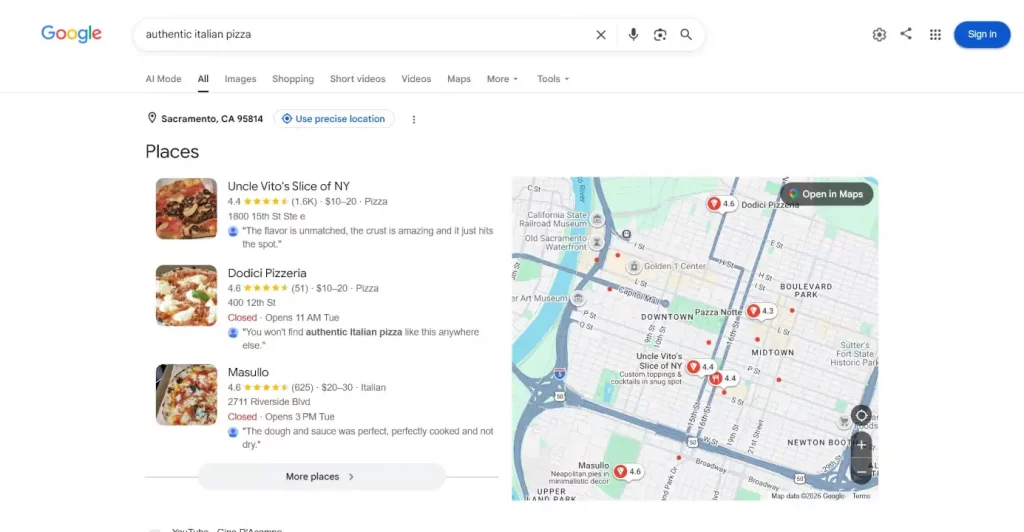
Sure, if you’re a downtown pizzeria, other nearby pizza outlets “are” your competitors. But on search engines? The competition landscape changes drastically. Your competitors fall into two major categories:
- Direct Business Competitors: Brands that sell the exact same product or service as yours in your service area. For instance, other pizza outlets in your vicinity.
- Organic Search Competitors: Any website, media publication, or directory that captures the attention of your target audience on the Search Engine Results Page (SERP) for your core topics. These could be pizza recipe websites, food blogs, or others.
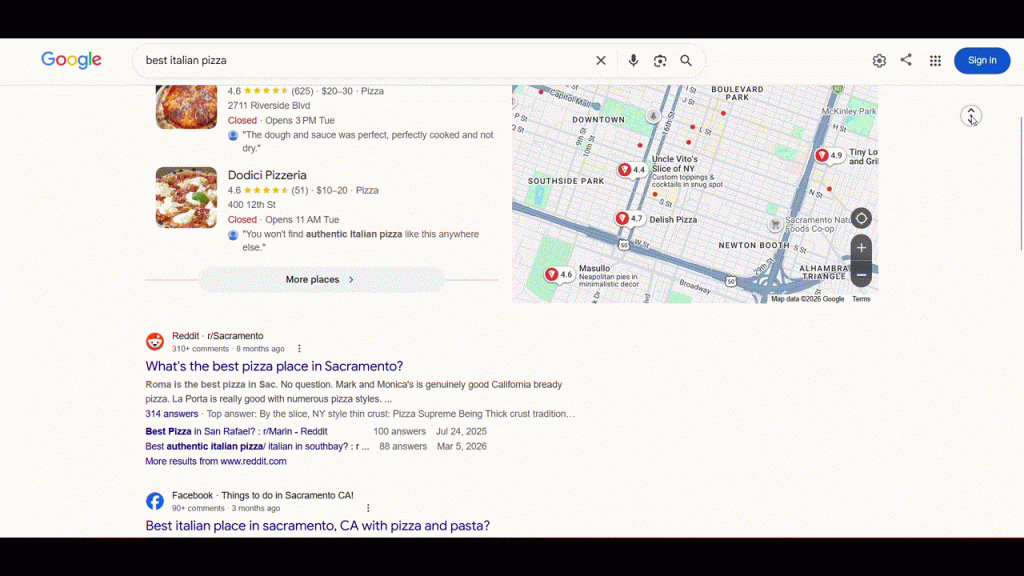
So, how to find out the real competitors who are vying for the attention of the same audiences as you are? Here’s the step-by-step process to identify your search competitors:
Step 1: Make a List of Your Core Topics
Compile a seed list of 5 to 10 core keywords that precisely describe your primary business offer. Here are some examples:
- Digital marketing agency
- SEO services
- PPC management
- Email marketing service
- YouTube marketing service
- Content marketing service
- Social media marketing service
- Weightlifting / Powerlifting technique
- High-intensity functional fitness (WODs)
- Athletic performance & mobility drills
- Personalized strength coaching
- Pre- and post-workout sports nutrition
- Group fitness camaraderie & community events
Step 2: Search Your Core Topics on an Unpersonalized Browser
Open an incognito window and search the keywords you shortlisted in the previous step. Yes, it’s critical that you do this on an incognito or private window for unbiased results. Record all the top websites ranking for those keywords.
Step 3: Compile a List of Your Competitors
Document the top 10 domains that consistently appear across these query spaces. These represent your true organic search competitors.
2. Find Competitor Keywords and Top Pages
If the competitor website is relatively small, with only a few dozen pages, you can perform this task manually, albeit with some compromise in accuracy.
You can visit their blog section and dig into the topics they cover. Look for patterns like:
- Beginner guides
- Comparison articles
- Templates
- Checklists
- Case studies
- Product category pages
- Glossaries
- Tool pages
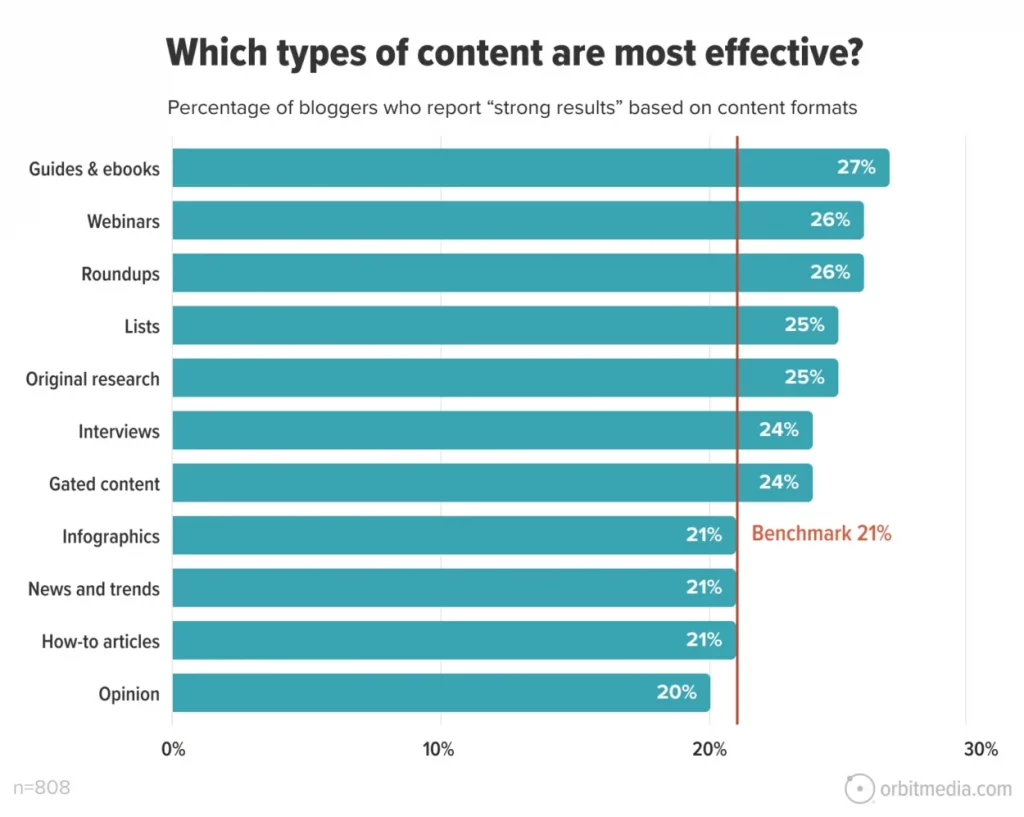
Such blogs typically do the heavy lifting and pull the vast majority of traffic to websites. According to The 12th Annual Blogger Survey by Orbit Media, guides, ebooks, webinars, roundups, and lists deliver above-average performance.
You can also access the XML Sitemap for quicker access to the list of all pages on your competitor website. As a general rule, sitemaps can be accessed at the slug: /sitemap.xml. For instance, www.themagicdart.com/sitemap.xml is where you’ll find MagicDart’s XML sitemap.
However, the manual method is highly inaccurate and time-consuming, especially for large websites. Fortunately, there’s an easier way to do this – using tools. Here are the top tools for digging out the best-performing competitor pages:
- Ahrefs: Gold standard for competitor research
- SEMrush: Best comprehensive SEO tool, with excellent competitor research features
- SE Ranking: Budget-friendly SEO tool with enterprise-grade competitor research capability
- Similarweb: Best for 360-degree traffic measurement from search engines, social media, and third-party platforms
- SpyFu: Best for viewing historical performance of competitor pages
Here’s how to use SEMrush to find competitors’ top pages:
Step 1: Add Your Competitor to SEMrush
Log in to your SEMrush account, and open the “Organic Rankings” tool in the left panel. Enter your competitor’s domain and hit “Enter.”
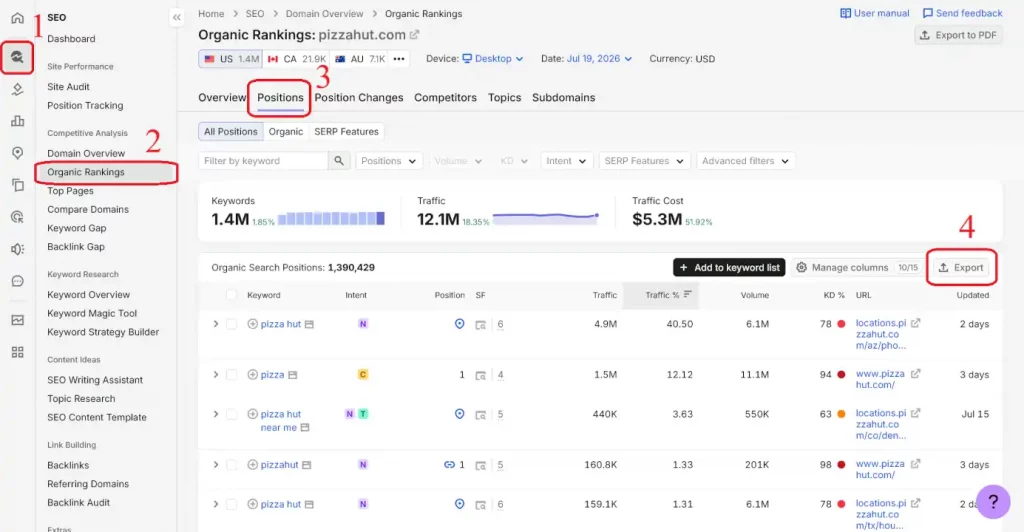
Step 2: Export The Pages
Head over to the “Positions” tab and hit “Export” to save the data to your desktop for deep analysis.
3. Clean Your Competitor Keywords List
You now have a list of top-performing competitor keywords and pages, but they’re not all useful to you. The list must be cleaned before use. Remove the following keywords from the list:
- Branded keywords
- Employee names
- Company names
- Customer support queries
- Login-related searches
- Job listings
- Irrelevant countries
- Duplicate phrases
- Misspellings
- Keywords unrelated to your business
4. Shortlist the Most Relevant Keywords
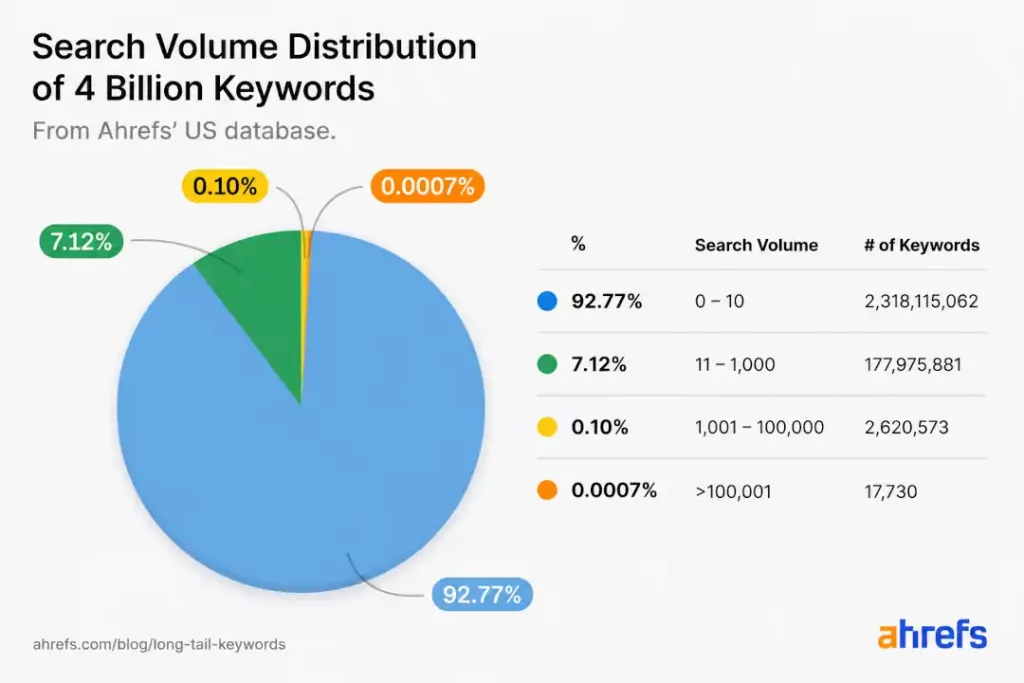
You’ll notice that the vast majority of keywords your competitors are ranking for have low volumes. That’s not a coincidence. According to Ahrefs, 92.77% of keywords pull less than 10 monthly searches. These keywords are of no use to us when we’re aiming to beat the competition. So, you will be ignoring the bulk of the keywords you unearthed in previous steps. Targeting medium-tail and head keywords naturally ranks you well for a variety of long-tail keywords too.
For us, two types of keywords matter:
- Keywords with Page 1 Rank: Filter for keywords where the competitor ranks in positions 1 through 10. This isolates the phrases driving real, tangible traffic. As per Backlinko’s analysis of 4 million Google search results, only 0.63% of Google users clicked anything on Page 2 of search results! So, anything beyond Page 1 is irrelevant to our research.
- Keywords with Decent Search Volume: Exclude terms with negligible monthly volume (e.g., fewer than 50–100 searches/month), unless they possess exceptionally high commercial intent.
My previous post on keyword research using free tools includes a brief guide on analyzing keywords and selecting them for content creation. Notice that it shares some strong similarities with the following steps, because the keywords strategy and content strategy that flow out of it are near-identical whether you’re performing fresh keywords research or competitor keywords research. The latter only expedites your research and increases the likelihood of your strategy’s success.
5. Cluster Similar Keywords
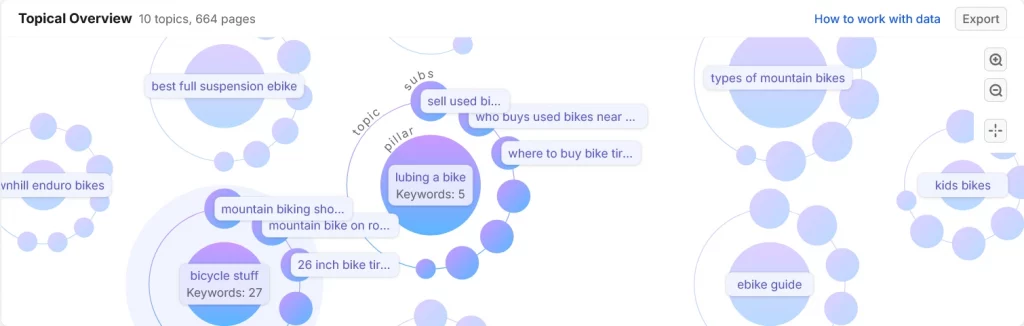
Clustering similar keywords serves three purposes in our mission.
- Consolidates Keywords into Topics: It helps us consolidate them into topics. Modern SEO is all about topics, not keywords. After all, a blog targeting a single medium-tail or popular keyword can also rank highly for a huge number of long-tail keywords.
- Developing Topic Clusters: It gives us readymade blueprint for us to implement pillar-and-cluster article strategy, which compounds the value of our SEO efforts.
- Prevents Keyword Cannibalization: Clustering similar keywords avoids wasting precious resources on producing similar or duplicate content, and also prevents our content from cannibalizing each other’s traffic.
6. Categorizing Target Keywords by Search Intent
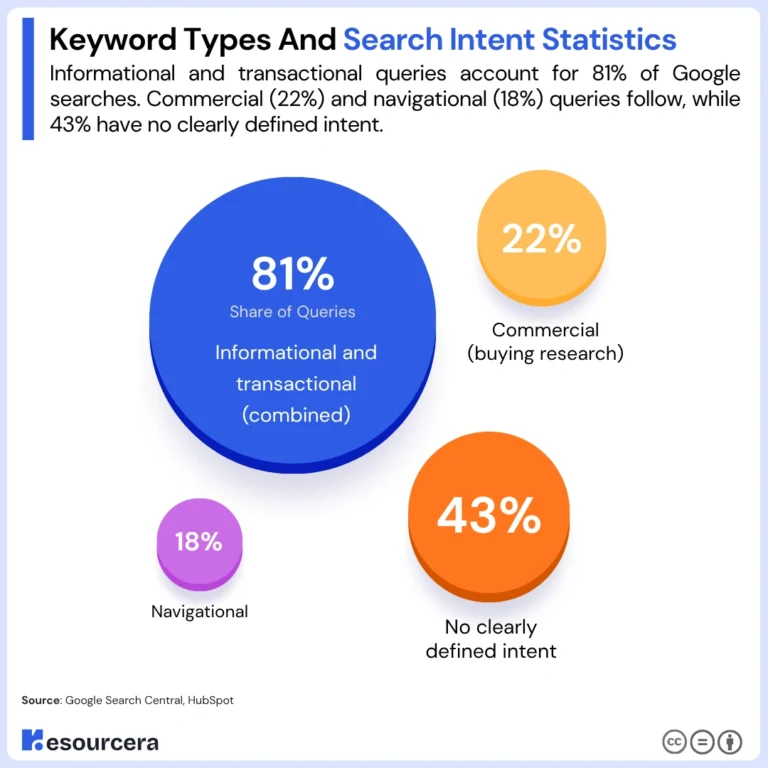
Targeting a high-volume keyword with the wrong type of content is one of the fastest ways to fail. Google’s algorithms are highly tuned to match the specific intent behind a query. You must categorize your discovered competitor keywords into an explicit content funnel.
| Funnel Stage | Underlying Intent | Query Indicators & Modifiers | Ideal Content Format |
|---|---|---|---|
| Top of Funnel (TOFU) | Informational: Users are looking for answers, guides, or troubleshooting help. | how to, what is, guide, template, tutorial | Long-form blog posts, ultimate guides, step-by-step documentation. |
| Middle of Funnel (MOFU) | Commercial: Users are evaluating options, comparing features, or looking for lists. | best, top, vs, comparison, review | Listicles, comparison tables, product roundups, case studies. |
| Bottom of Funnel (BOFU) | Transactional: Users are ready to convert, sign up, or make a purchase. | buy, price, cost, trial, software | Dedicated landing pages, product feature matrices, sign-up forms. |
Pro Tip: Keywords with navigational intent are not relevant for competitor research.
7. Perform a Thorough Content and Keyword Gap Analysis
The most efficient path to organic growth lies in finding Content Gaps, the specific keywords where multiple competitors rank prominently on page one, but your domain is completely absent.
This strategy allows you to prioritize high-value topics that the market has already validated.
The manual process to do this isn’t too complicated. You already have a list of keywords for which your competitors are ranking in the top 10 search results. Compare them with your top-ranking keywords. All those top competitor keywords for which you do not currently rank highly together constitute your keyword gap.
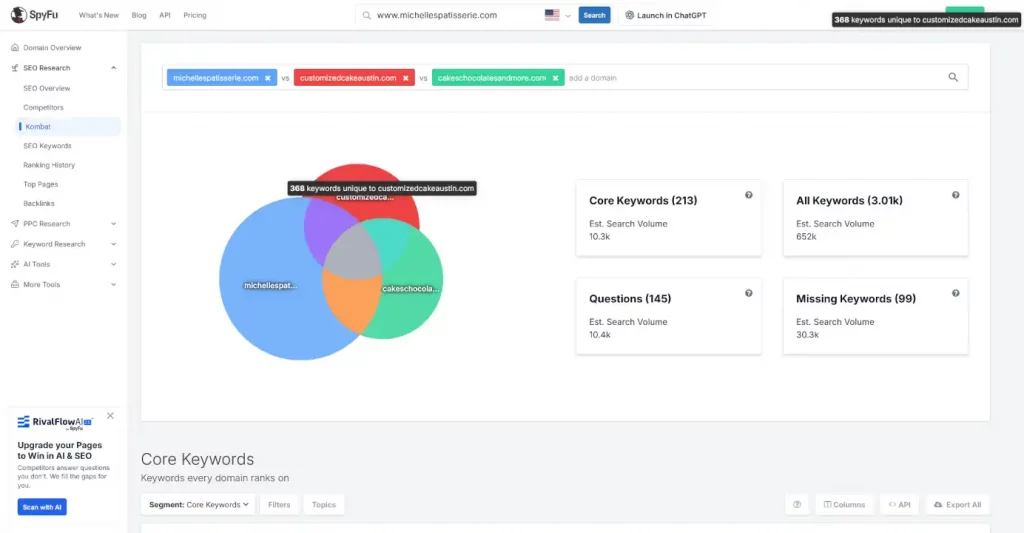
Tools like SEMrush, Ahrefs, SpyFu, SE Ranking, Similarweb, and others simplify this task for you. All you need to do is enter your competitors in the tools, and they’ll identify the keyword gaps between you and them. They’ll even spit out keyword difficulty (KD) and Search Volume metrics to help you figure out which keywords to target with content.
8. Deconstruct the Competitor’s Content Architecture and Intent
Once you have identified a high-value keyword gap, do not rush to write a generic response. Never assume you know what Google wants. Instead, try to understand exactly why the competitor’s page is winning the ranking. Search the keyword on Google and analyze the page 1 search results for on-page SEO insights.
The On-Page Audit Checklist:
- Search Intent Alignment: Is the competitor’s page a long-form informational piece, a short tool interface, or a commercial product page? Or is it a tool, template, landing page, or something else? Match this structural format and search intent exactly. For instance, a search for “best keyword research tools” is less about learning keyword research and more about evaluating software.
- Semantic Heading Structure: Analyze their use of heading tags (H1, H2, H3). Note the secondary subtopics, common questions, and peripheral definitions they cover to satisfy the query’s breadth.
- User Experience and Interactive Elements: Document whether the ranking competitor uses downloadable templates, interactive calculators, embedded videos, or unique proprietary graphics to enhance dwell time.
Content Depth: Take note of any original research, statistics, examples, and FAQs they’ve covered in their content.
9. Evaluate Keyword Difficulty in Context
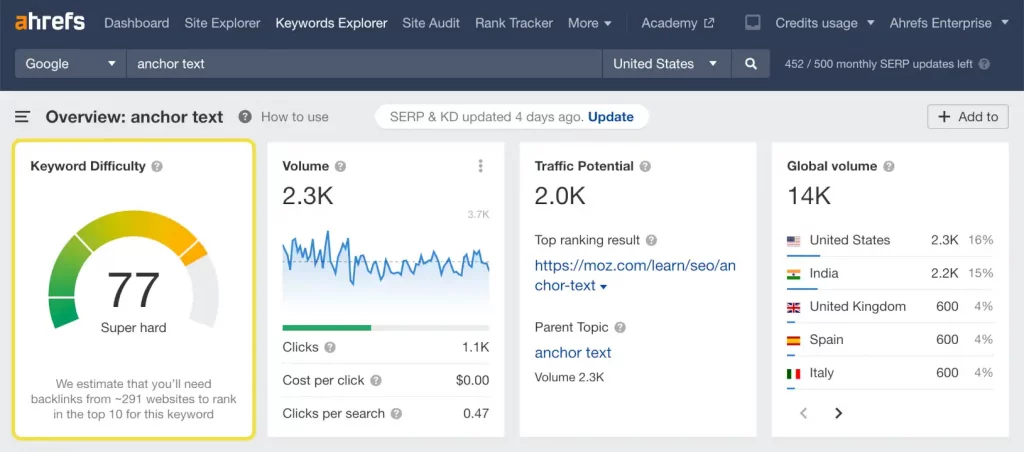
Do not let keyword difficulty (KD) dictate your SEO strategy, because it is nothing more than an ego-boosting metric when taken out of context. Instead, take a more nuanced approach to KD. Rather than ignoring high difficulty keywords, ask yourself, “Why is this keyword difficult to rank?
A quick look at the top search results answers this question for you, and the answer is usually one of the following:
- High-authority domains dominate the results
- Search intent is well established
- Existing content is exceptionally comprehensive
- Strong backlink profiles of competitors
- Frequent content updates
For popular keywords with a high KD of 70 to 100, 75% of top results were occupied by domains with a Domain Authority of at least 40.
So, aim for quick wins initially by targeting low-competition keywords, and then rise through the ranks of keyword difficulty.
If the reasons behind a keyword’s difficulty seem surmountable, especially without requiring expenditure of unreasonable amounts of resources, you can still rank for difficult keywords.
10. Creating Content with True Information Gain
To outrank an incumbent competitor, your page cannot simply be a paraphrased or rewritten version of their content. Google’s Helpful Content Guidelines actively look for Information Gain: unique value that does not exist anywhere else on the SERP.
That doesn’t mean you have to dig up original research. It just means that you must offer a unique take, opinion, approach, etc. to the content that’s not available elsewhere. Here are some ideas on how to make it happen:
Tactics for Higher Information Gain
- Introduce Proprietary Data: Share original case studies, internal experiments, or proprietary statistics gathered by your team.
- Provide Expert Perspectives: Integrate quotes, opinions, or actionable insights from actual subject matter experts (SMEs) to satisfy Google’s E-E-A-T (Experience, Expertise, Authoritativeness, Trustworthiness) criteria.
- Improve the Utility: If a competitor lists 10 steps to solve a problem, provide a cleaner 7-step workflow paired with a free, downloadable automation script or spreadsheet template.
As a general practice, try to create content that offers 10x as much value as the best-performing piece of competitor content. Use this SEO checklist to enhance your content.
Key Takeaways
Today, you learned:
How to Differentiate and Identify Search Competitors: True search rivals include any site capturing your target audience’s attention on the SERPs, not just direct businesses selling the same products. You learned to identify them manually using Google Search and using SEO tools.
How to Leverage Tools for Top Pages: Use software like SEMrush, Ahrefs, or SpyFu to instantly identify a competitor’s highest-performing pages, along with their organic traffic metrics.
Why and How to Sanitize and Filter Target Keywords: Clean your keyword data pool by removing branded terms, company names, and phrases ranking past Page 1 or carrying negligible monthly search volume.
How to Cluster Content by Funnel Intent: Prevent ranking cannibalization by grouping related phrases into explicit topical clusters based on search intent (Informational, Commercial, or Transactional).
Auditing and Deconstructing Competitor Content for Information Gain: Reverse-engineer top competitor pages to map out their formatting structure and create superior resources featuring unique data or expert insights.
Frequently Asked Questions
If you’re looking to beat your competition using strong competitor analysis, robust SEO strategy, and strong content marketing techniques, call us at +91-79869-10830, email us at [email protected], or drop us a message here.

Leave a Reply