
The Ultimate Local SEO Checklist: 34 Tips to Dominate Local Search Ranking
76% of consumers who perform a local search on their phone visit the store within a day. Clearly, local search is critical for the success of physical businesses. Yet, it’s getting harder for businesses to surface in local search. Local search has evolved from a simple directory game into a sophisticated, multi-layered algorithmic ecosystem. This local SEO checklist offers actionable steps you can implement today and witness a boost in your local search rankings.
A business profile, a handful of generic citations, and a city mention in the title tag together do not constitute local search success anymore. Google relies on advanced machine learning models, entity relationship graphs, and real-time proximity matching to serve local search results. Relevance, proximity, and prominence play critical roles in determining which results surface to the top.
This local SEO checklist covers ready-to-implement tactics that:
- Surface your business in Google 3-pack
- Rank high in local search results on search engines
- Earn mentions in Google AI Overviews
- Trigger citations and recommendations in AI-synthesized answers
Step 1: Set Up and Optimize Your Google Business Profile (GBP)
Your Google Business Profile (GBP) is the foundation on which your entire local search ranking system stands. Whenever your customers search for you, your GBP listing is what they see. Setting it up and optimizing it is the highest-leverage activity you’ll do today. So, here’s an itemized list of everything you need to do to get it right:
1. Add or claim your Google Business Profile
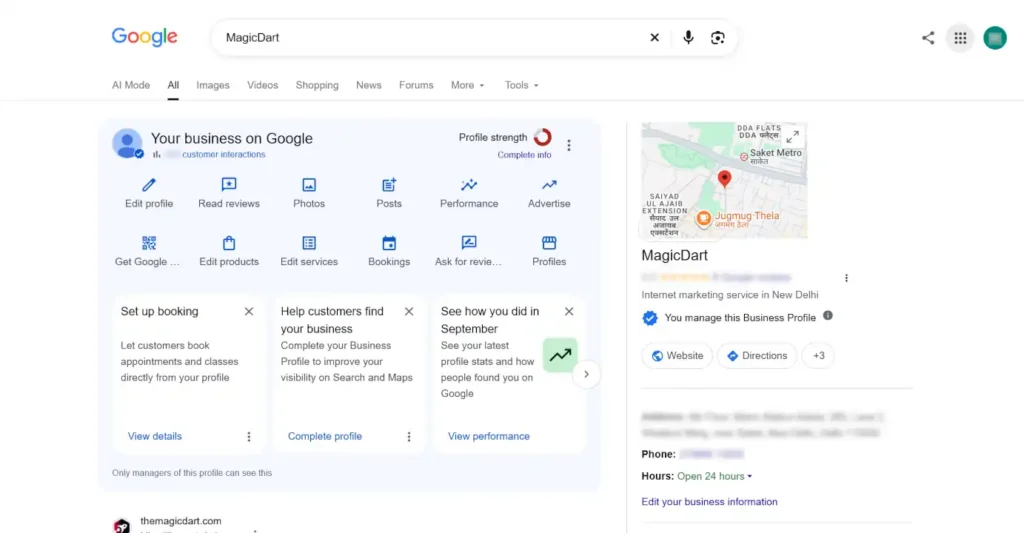
Create your new Google Business Profile here. Occasionally, you might find that your business is already listed on GBP, in which case you must claim it. It’s a simple enough step, and nothing is daunting about it.
2. Verify Your Google Business Profile
Verification is crucial. Only verified GBP listings appear in search results. So, get your GBP listing verified immediately. Confirm your business or brand name, address, and phone number details (NAP), ensuring that they match precisely with the details on your website. In fact, NAP consistency across your website, GBP listing, and business directory listings is critical for trust-building.
3. Set Specific Primary Category and Secondary Categories
Your primary business category carries the most weight. The more accurately it describes your business, the more likely it will rank in that category. For instance, “sports massage therapist” beats “massage service.” Also, add secondary categories that apply.
4. Add Keyword-rich Descriptions
Your primary business description is the most important one. Make it accurate, descriptive, and jargon-free. Use keywords that your audience uses for searching businesses like yours.
Additionally, add products and services you offer, along with accurate, keyword-rich descriptions for them.
5. Add Contact Details
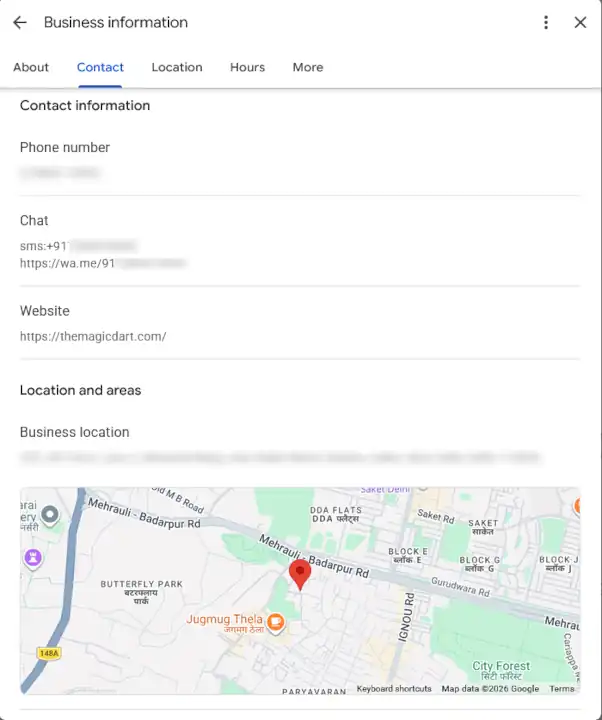
Add your business phone number, your website URL, and email address. You can also add a WhatsApp chat link for users to initiate direct conversations with you. It’s a powerful feature, especially in emerging, mobile-first markets. Do not ignore it!
6. Add Actual Photos of Your Business
Building exterior, storefront image, photos of the interior, team members, large business signs with precisely matching business details, etc., go a long way in earning trust for your GBP listing. Refresh the images periodically and upload new images to stay current.
7. Add Map Pin and Directions
DO NOT drop the pin from up high above. Zoom in to your precise business location at the street level and mark it to avoid inadvertently dropping the pin too far from your exact location.
8. Set Visitation Hours, Details, and Amenities
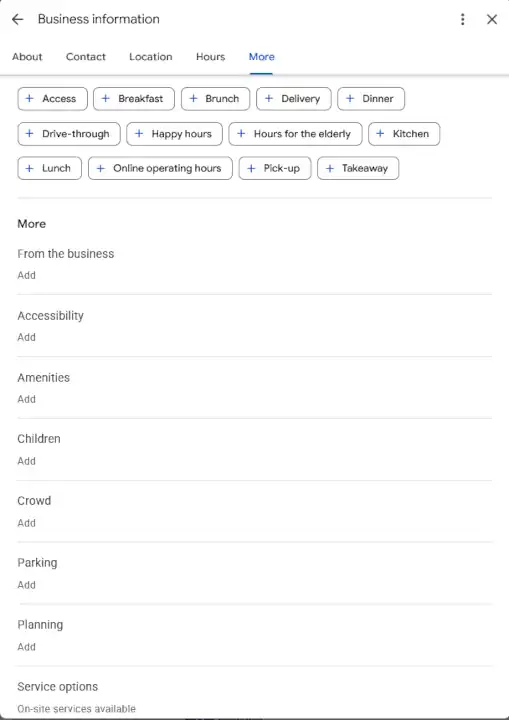
Set accurate opening hours, and mention physical amenities available for your visitors, such as Wi-Fi, restrooms, parking areas, digital payment support, and accessibility features for people with disabilities, among others.
9. Post Updates and Information Regularly
GBP posts are a great way to stay current, relevant, and useful to your audiences. So, post frequently. In fact, set up a weekly, fortnightly, or at least a monthly schedule. Additionally, add FAQs and answer any questions your audiences post to avoid someone else answering incorrectly.
Step 2: Optimize Your Website for Local SEO
Search engines and LLMs look to your website to validate your local presence data. Follow these steps to make it easy for search engine crawlers and LLM bots to verify your local SEO signals on your website:
10. Create Location-specific Pages
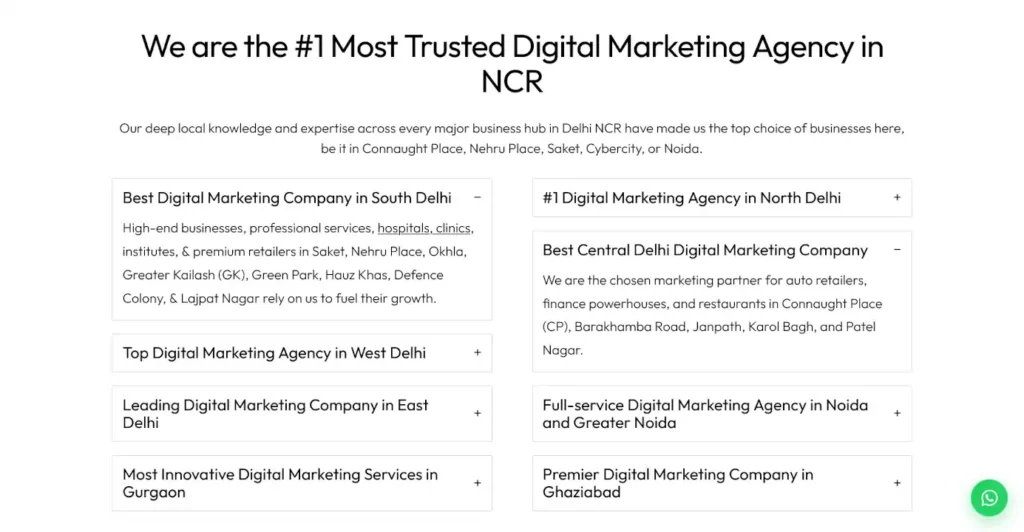
For a multi-location business, it’s crucial that you create a unique, custom webpage for each location. Do not just replace one location’s name with another and publish duplicate content for different locations. Every page must be unique and offer information unique to that location, such as hyperlocal neighborhoods, landmarks, attractions, etc.
11. Ensure NAP Consistency
The Name, Address, and Phone number (NAP) details on your website must be an exact match to those on your GBP listing, down to the last comma. NAP consistency is crucial for entity search and consumer trust-building.
12. Add LocalBusiness Schema on Every Location Page
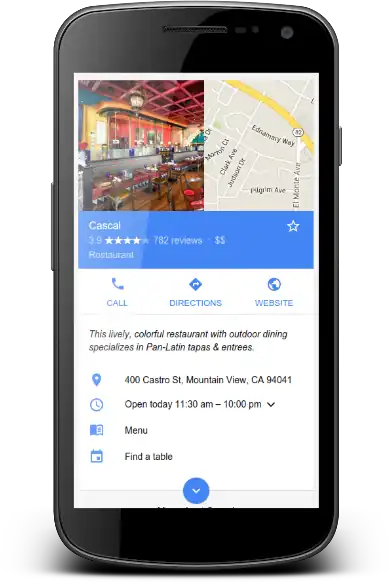
You can pull this information from schema.org, or use an LLM to create and add LocalBusiness schemas for specific location pages. Search engine crawlers and LLM bots can easily access and verify location schema data like address, geo-coordinates, hours, and sameAs links. It’s an important on-page signal for both search engines and LLMs.
13. Embed a Google Map on Each Location Page
Embedded Google Maps not only reinforce your location and help your visitors find you, but also send strong location signals to search engines and LLMs.
14. Include Strong Location Signals in Title Tags
Titles like “Web Designer in Dubai,” “Pizzeria in Trafalgar Square, London,” or “SEO agency in South Delhi” that use “service + location” combos work harder to earn your local ranking. A standard template is “Computer Repair Specialist in Miami, Florida | YourBrand” and it works!
15. Build a Backlink Profile
Location pages with a strong backlink profile will outperform other pages on your website. Work on attracting high-quality backlinks from established websites. But that’s not enough for local SEO. Focus on attracting and earning backlinks from local business directories, local platforms, other local businesses, and so on.
16. Pass Link Juice to Your Location Pages
Create links to your location webpages on your Home Page, service pages, blogs, and other high-performing pages that pull traffic for your website.
Step 3: Build Reviews and Reputation
Search engine AIs and LLMs today understand reviews and their sentiments. Building a strong reviews and ratings profile is crucial for local business success. These tips should help you do precisely that:
17. Create Business Profiles on Review Platforms
There’s no dearth of review platforms out there. You probably already have a listing on Google Business Profile, which is usually the first stop for reviewers looking to share their opinions of businesses. But Google Search and Google Maps aren’t the only places where consumers, or even search engines and AIs, look for honest feedback on your business.
Depending on your location, industry, and audiences, you may want to be present on Yelp, BBB, TrustPilot, G2, Clutch, Facebook, Instagram, TikTok, LinkedIn, Foursquare, Tripadvisor, or other niche review platforms.
| Country / Region | Primary Data Aggregators & Tier-1 Directories | Compliance & Technical Nuances |
|---|---|---|
| 01 Universal Global | Google Maps, Apple Business Connect, Bing Places, Facebook, Yelp. |
Baseline Requirement Required for all operations regardless of geographic location. |
| 02 United States & Canada | Data Axle, Foursquare, Neustar/Localeze, YellowPages, Better Business Bureau (BBB), Angi. |
Postal Standardization Adhere to USPS standard address formatting (e.g., matching secondary suite notations). |
| 03 United Kingdom & Europe | Yell, Scoot, 118 Information, Thomson Local, The Phone Book (BT), Europages. |
Privacy & Formatting Ensure review acquisition strategies comply with GDPR; use alphanumeric postal codes. |
| 04 India & South Asia | Justdial, IndiaMART, Sulekha, TradeIndia, IndustryBuying. |
Entity Verification Include GSTIN registration numbers across profiles to boost entity trust. |
| 05 Australia & New Zealand | True Local, Yellow Pages Australia, StartLocal, LocalSearch, White Pages NZ. |
Registry Synchronization Format Australian Business Numbers (ABN) consistently across business registries. |
18. Create Review Links and QR Codes
97% of consumers check online reviews for local physical businesses, which means you cannot ignore them.
Review links and QR codes work in different contexts. If you serve customers mostly online and collect email addresses and/or phone numbers of your customers, send them a quick message asking for reviews. This is where short review links prove useful.
On the other hand, if your customers visit you physically, display QR codes for posting reviews prominently, such as at checkout, restaurant tables, beside salon mirrors, etc.
19. Don’t Be Shy. Ask for Reviews, Especially During Moments of Satisfaction
Customers are most likely to share positive reviews during moments of satisfaction. Not days or weeks later. So, whenever you notice a satisfied customer, ask them to drop you a review, and make it easy for them to do so via short links or QR codes.
20. Respond to Reviews, Especially the Negative Kind
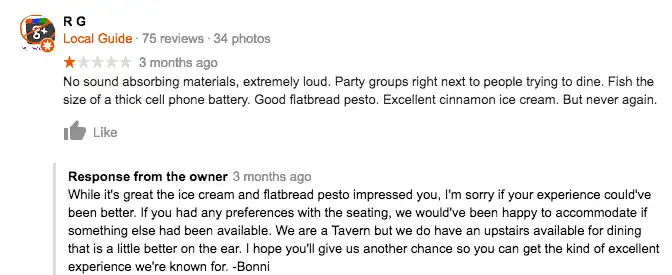
I don’t know what’s worse – not replying to reviews or posting template responses. It’s hard to say which one hurts a business’s reputation more. As a general rule, respond to your reviews, both positive and negative. Keep it courteous and human.
If it’s a negative review, express genuine empathy and take accountability for their experience. When possible, express possible solutions you can implement and invite the customer to visit again. This sends strong signals to other potential customers that you genuinely care about their experience with you.
21. Get Honest Review-style Articles from Review Blogs and Critics
Review blogs are not replacements for honest customer reviews on established third-party platforms. However, they can divert substantial traffic to your site and send strong signals to search engines and LLMs that you’re a reputed business.
Do not pay them to write glowing, unrealistic-sounding review articles. Invite them to try your products and services, and share honest reviews. Influencers have usurped this role in many industries like beauty, wellness, food, and so on. So, you might want to tap into them as well.
Likewise, try to make it to “best-of” lists in your industry. They matter, too.
Step 4: Claim Your Place in the Industry with Citations
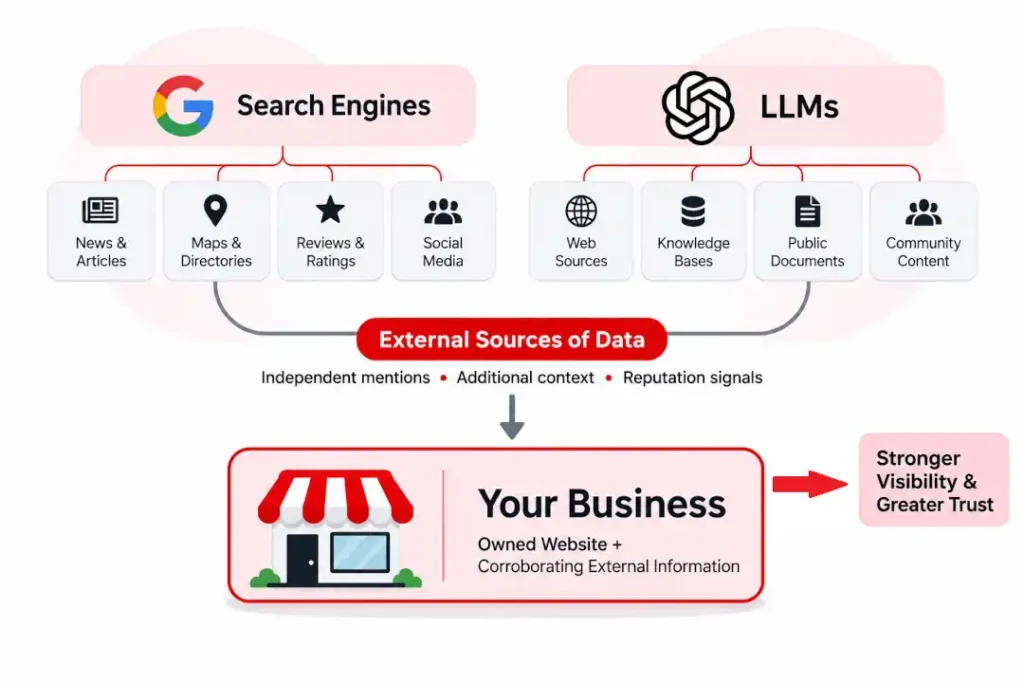
Search engines and LLMs rely on external sources of data to validate your business information. Whenever there’s a mismatch, it doesn’t just signal inconsistency, but also unreliability and unprofessionalism on your part. More importantly, each third-party mention acts as a vote of confidence in you. So, these external sources of information are almost as critical as your own website for your local search rankings. Here’s how you manage them:
22. Perform a Detailed Audit of Third-party NAP Data
Create and manage a list of all business directories, local directories, business associations, and other places where you publish information about your business.
Whenever there’s any change to your NAP details, you can then immediately update them across this list, thereby ensuring universal consistency.
23. Do Not Ignore Social Signals’s Impact on Your Local SEO
Social platforms are a crucial source of data for search engines and LLMs. Therefore, always publish, update, and maintain exact matches of your business details everywhere. You already know the importance of NAP consistency. What also matters is the recency and validity of data. Remove dead phone numbers, update old email addresses, keep addresses current, and so on.
Besides social platforms like Facebook, Instagram, and LinkedIn, pay special attention to Bing Places, Apple Business Connect, Yelp, etc. They matter more than they used to.
24. Earn Mentions in Local Industry Handbooks, Directories, and Local Press
Trade associations, chambers of commerce, cross-industry local associations, etc. offer strong approvals when they mention you on their website. Join them, and use them.
In addition to PR outreach, you have at your disposal a wide variety of creative options to gain free press. Sponsor a high-school sports team, host local events, participate in local fairs, etc., to generate free and organic buzz around your brand.
Step 5: Create Local Content That Attracts Citations and Mentions
High-quality, useful content naturally attracts visitors, while generating backlinks and references from other content creators. Incoming traffic and backlink reputation both feed on each other, creating a virtuous cycle that boosts both over time. So, develop a strong content strategy using the following tips:
25. Find Questions That Matter to Your Audiences and Answer Them
Typical questions like “What to do in X,” “How much does Y cost in Z,” “Best time to visit A,” etc. are great ideas.

If you’re thinking this approach isn’t compatible with your industry, I’d like to remind you that the pre-eminent global restaurant rating guide, Michelin Guide, was originally devised as a tool by Michelin tire manufacturer to promote demand for cars and usage of tires. And it worked like a charm!
26. Publish Link-worthy Content
Do some research into what your local newspapers, magazines, content creators, and other local sites love to publish. Content creation is hard. So, most websites have one or more specific types of filler content categories that they tap into all the time, with genuinely fresh and creative content forming a small part of their repertoire.
Pieces like “a homeowner’s guide to building a garage,” “X things to try in Y for families,” “X Awesome Activities for Children this Summer,” etc. never go out of style, and always earn links from other content creators.
27. Repurpose Your Content
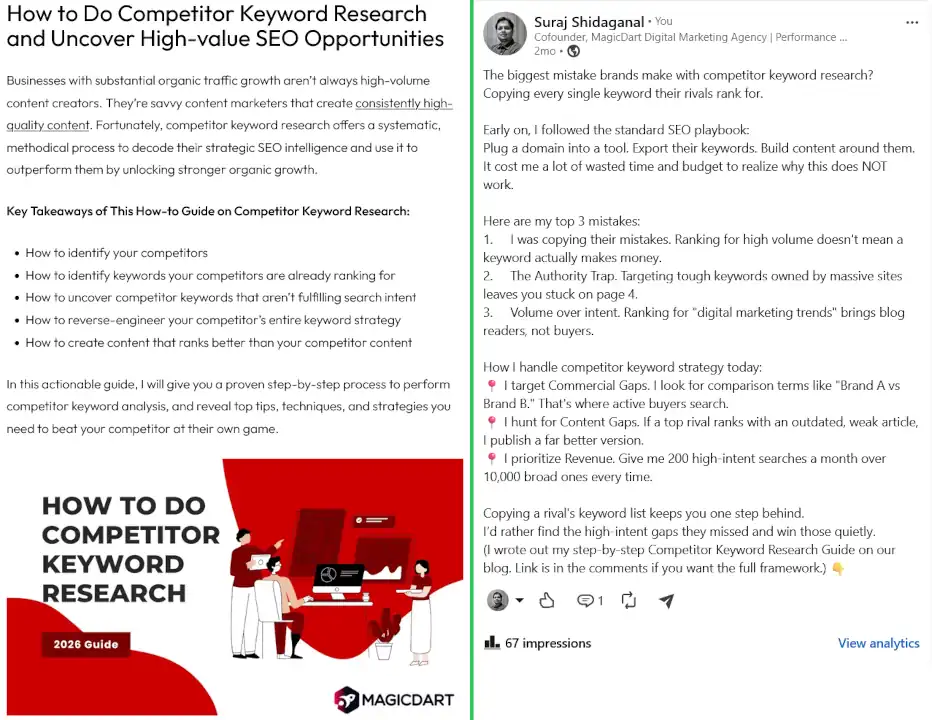
High-quality content is expensive to create. Don’t waste it on a single publish. Reformat it to every possible context and publish it. That means a single blog post can also be a social post, a series of social posts, a podcast, a YouTube video, an infographic, and even a GBP post. Extract maximum value out of every single piece of content you create. This keeps your every digital touchpoint up to date and fresh.
28. Publish Case Studies with City Name in Titles
Real work always gets traction. If you can showcase real work you did for a local client, it can have a strong impact on your local SEO efforts. Mentioning both the client name and the city/neighborhood of your location in the meta title sends strong SEO signals to search engines. While mentioning them in the meta description does not have any SEO value, it can provide the necessary context to trigger clicks. So, add them anyway.
Step 6: Be Bot-friendly to Get Recommended by Chat AIs and Google AI Overviews
29. Audit AI Citations and Create Content Accordingly
AI is changing how consumers search for information and solve their problems online. Monitor your brand presence in common LLMs like ChatGPT, Perplexity, Google Gemini, Claude, Google AI Overviews, and others. Ask questions your audience could be asking, such as “best [your business category] in X,” “who makes the best Y in X,” etc.
Google auto-suggestions, Quora, and Reddit are excellent sources of questions or queries to ask LLMs. Whether you see your brand surface in the answers to these queries or not, you’ll know what type of content you must create to get cited for specific queries. Do this regularly to remain relevant.
30. Ensure Recency of Content and Reviews
How do chat AIs know your business is still alive, kicking, and worth recommending? It looks at your content and reviews.
Did you publish blogs recently? Have you generated any reviews recently? These questions matter for AI SEO. When a 2-year-old review is the most recent you’ve got, it signals to the AI that you may not be active anymore. So, it won’t recommend you!
31. Create AI-friendly Content
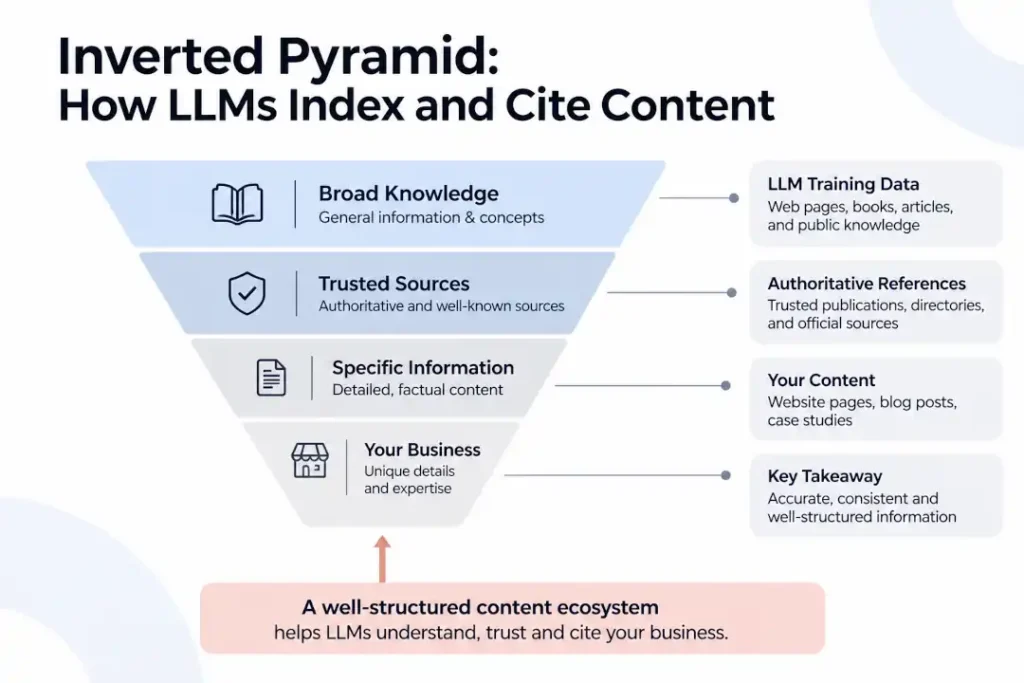
LLMs love direct answers, clear hierarchies, well-structured and keyword-rich headings, schema markup, and the inverted pyramid content structure. AI only cites content that it can easily parse and synthesize. So, make your content as easy as possible for it to read and digest.
32. Update Your Robots.txt File to Allow AI Bots
Unless there’s a strong reason for you to protect your website content against AI indexing, allow AI bots to crawl and parse your content. You can choose to allow specific AI bots and block others, too. As a general best practice, allowing bots from ChatGPT, Google Gemini, Claude, and Perplexity is good for generative engine optimization.
Step 7: Improve Mobile Usability and Conversion Triggers
BrightLocal’s Consumer Search Behavior, 2026 report found that 73% of local searches start on mobile devices, like tablets and smartphones. Consequently, optimizing your website and local presence for mobile devices is critical to your success in local search. Follow these tips to optimize your website for mobile usability:
33. Speed Up Your Website
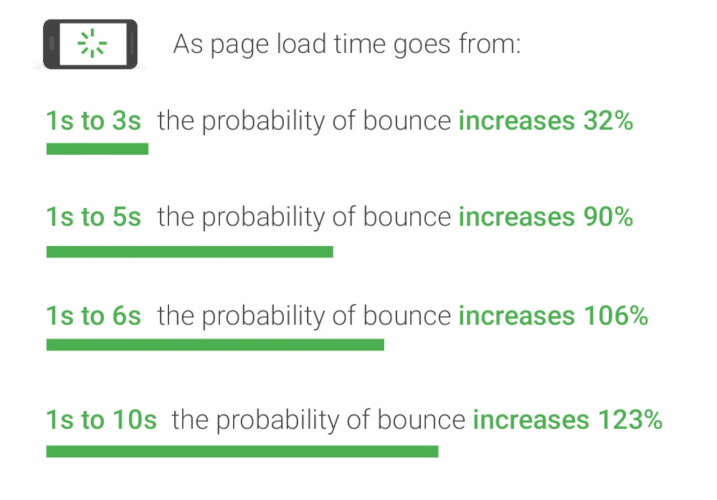
Make sure your website loads fast, even on slow 3G and 4G connections. As a benchmark, Largest Contentful Paint (LCP) should load within 2.5 seconds. Follow best practices like image compression, using lightweight image formats like WebP or AVIF, and eliminating render-blocking CSS and JavaScript.
34. Implement Sticky Contact Buttons
Implement sticky or prominent tap-to-call buttons (<a href=”tel:+1234567890″> or WhatsApp Me links) across all mobile layouts to reduce conversion friction.
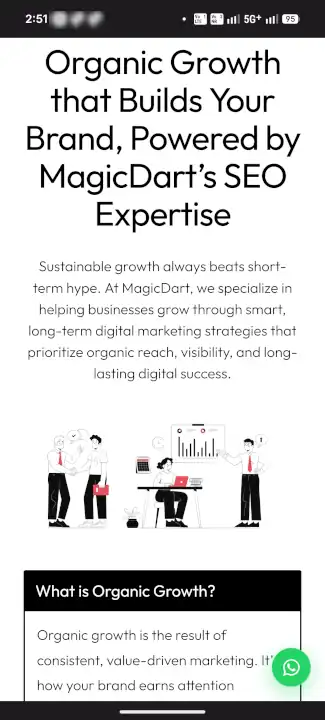
The choice of button should be based on your local audience’s preferences. For instance, US consumers have a strong preference for Chat AIs on websites, while UK consumers prefer phone call buttons, and Indian consumers demand WhatsApp links. While these are broad generalizations, preferences change based on industry and audiences. For instance, audiences making high-value transactions prefer phone call buttons, no matter where they’re located.
Key Takeaways Summarized
Here’s a quick summary of the most crucial takeaways from this post:
- The Modern Local Search Landscape: High mobile intent drives immediate store visits, requiring optimization for machine learning, entity graphs, and generative AI search to achieve local SEO results.
- Google Business Profile (GBP) Optimization: Select hyper-specific primary categories and place your map pin at street level. Maximize local pack rankings by routinely updating real photos, operating hours, amenities, and posts.
- Website & On-Page Architecture: Build custom, landmark-rich pages for each location rather than clone pages. Match NAP data identically to GBP, implement LocalBusiness schema, and embed Google Maps to reinforce geo-signals.
- Reviews & Reputation Management: Solicit reviews via short links or QR codes at the exact moment of customer satisfaction. Reply promptly and empathetically to all feedback, tailoring citations to regional aggregators.
- Local Content & PR: Earn local backlinks and press by sponsoring community events and publishing localized, high-utility resources. Repurpose successful guides into case studies that include city and client names in title tags.
- Optimizing for AI Overviews & LLMs (GEO): Content recency and active reviews help AI models recognize your business as operational. Structured schemas, inverted pyramid writing, and robots.txt permissions make webpages AI-friendly.
- Mobile Usability & Conversion Triggers: Ensure fast load speeds using lightweight image formats like WebP or AVIF. Deploy location/audience-appropriate sticky contact CTAs: AI chat for the US, phone buttons for the UK, and WhatsApp for India.

Leave a Reply